
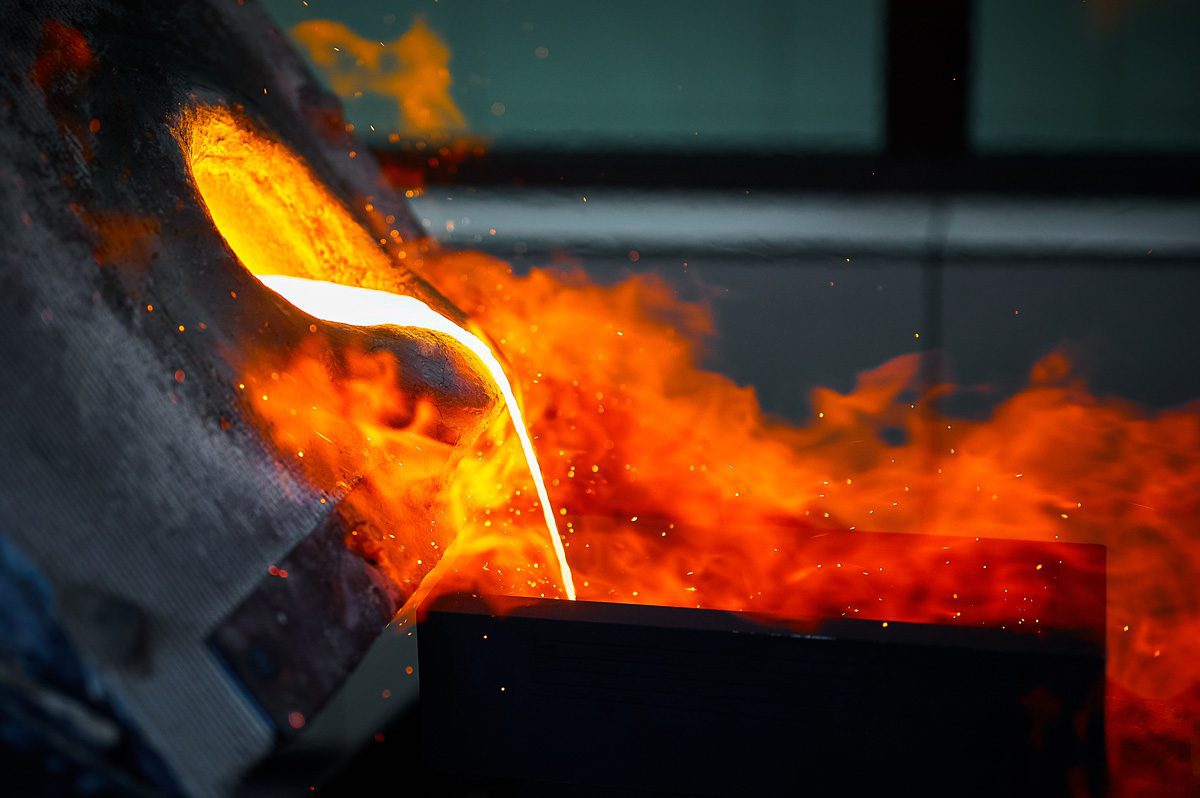
In the industrial world, high-temperature bearings are a specialized class of components designed to perform reliably under the most demanding conditions.
Heat, heavy loads, contamination and continuous operation cycles all create extreme challenges for mechanical systems. In these environments, selecting the right bearing becomes a matter of efficiency, safety and productivity.
A standard bearing, even if high quality, may deform, lose lubrication or fail above 150 °C. High-temperature bearings, however, are engineered with special materials and lubricants to deliver stable performance up to 350 °C and beyond, without compromising service life.
Challenges of high-temperature environments
High-temperature applications represent one of the toughest fields in mechanical engineering. Bearings must withstand:
-
Thermal expansion, which alters internal clearance and geometry.
-
Lubricant degradation, as conventional oils and greases lose their protective properties.
-
Metal oxidation and corrosion.
-
Variable radial and axial loads, often combined with vibration or shocks.
-
Environmental contamination, including dust, fumes and aggressive vapors.
In such harsh conditions, choosing the wrong bearing or lubricant can lead to serious damage and costly downtime.
Industrial sectors using high-temperature bearings
High-temperature bearings are essential in numerous industries:
-
Steel production: rolling mills, reheating furnaces, slab conveyors.
-
Glass and ceramics: continuous furnaces, forming machines, dryers.
-
Food industry: baking ovens, drying systems, hot-packaging lines.
-
Plastic industry: extruders, injection molding machines, compressors.
-
Energy sector: turbines, hot-gas fans, heat recovery systems.
-
Wood processing: dryers, presses and panel production machinery.
Each environment presents unique thermal and mechanical stresses, making proper bearing selection vital.
Materials used in high-temperature bearings
Special steels
These bearings are made of heat-treated alloy steels that maintain hardness and dimensional stability up to and beyond 300 °C.
Common options include:
-
Modified AISI 52100 for oxidation resistance.
-
Martensitic steels for service above 250 °C.
-
Stainless steels such as AISI 440C and 630 for corrosive or humid conditions.
Technical ceramics
In extreme environments, hybrid or full-ceramic bearings with silicon nitride (Si₃N₄) or zirconium oxide (ZrO₂) balls offer:
-
Temperature resistance up to 800 °C,
-
Low thermal expansion,
-
Minimal friction and high precision,
-
Total corrosion immunity.
Cages and seals
Cages are made from stainless steel, brass or reinforced polymers capable of resisting thermal deformation, while seals may be made from PTFE, FKM (Viton) or graphite, depending on lubrication type and operating conditions.
Lubrication for high temperatures
Lubrication is the core of bearing performance.
At extreme heat, conventional greases and oils degrade rapidly. Specialized formulations include:
-
Silicone or perfluoropolyether (PFPE) greases stable up to 350 °C.
-
Dry lubricants such as graphite, molybdenum disulfide (MoS₂) or PTFE for use above 400 °C.
-
Synthetic oils with high oxidative stability for recirculation systems.
Lubricant choice depends on:
-
Operating temperature,
-
Rotational speed,
-
Load and environment.
Improper lubrication can cause oxidation, wear and seizure.
Types of high-temperature bearings
High-temperature ball bearings
Ideal for high speeds and moderate loads, used in motors, fans and conveyors. They can be supplied pre-lubricated with high-temperature grease or for dry/oil operation.
Cylindrical roller bearings
Built for high radial loads and intense heat. The line-contact design ensures stability and long life.
Spherical roller bearings
Suited for misaligned or vibrating applications such as rotary kilns and inclined conveyors. Often fitted with brass cages and dry lubricants.
Shielded radial bearings
With metal or PTFE seals, they prevent dust ingress and lubricant loss, ensuring long-term performance.
How to choose the right high-temperature bearing
-
Average and peak temperature – never exceed the rated limit.
-
Speed factor (n·dm) – higher speeds require lower-friction materials and proper lubrication.
-
Load type – radial, axial or combined loads affect geometry and cage choice.
-
Environment – consider dust, gas or corrosive agents.
-
Lubrication system and maintenance schedule – determine whether sealed, re-lubricable or dry bearings are best.
Advantages of high-temperature bearings
-
Extended service life thanks to heat-resistant materials.
-
Stable performance under thermal cycling.
-
Reduced downtime through longer maintenance intervals.
-
Improved energy efficiency via lower friction.
-
Enhanced safety in critical production processes.
Maintenance and periodic checks
Even specialized bearings require regular inspection:
-
Monitor temperature with sensors.
-
Analyze vibration and noise.
-
Visually check seals and lubricant condition.
-
Verify internal clearance and heat deformation.
In thermally intensive environments, predictive maintenance using vibration and thermal analysis is strongly recommended to schedule interventions before damage occurs.
Innovation and research in high-temperature bearings
Recent research has introduced hybrid technologies and protective coatings that further enhance resistance and performance:
-
DLC coatings (diamond-like carbon) to minimize wear.
-
Titanium or chromium nitriding for surface hardness.
-
Reinforced composite cages for thermal stability.
-
Built-in solid lubricants for lubrication-free operation.
These innovations define the future of high-performance bearing design, especially where temperature is a critical factor.
Conclusion
High-temperature bearings represent the cutting edge of industrial engineering, combining durability, precision and safety under the most extreme conditions.
By selecting appropriate materials, lubricants and configurations, industries can ensure maximum uptime, reliability and mechanical efficiency.
Each application — from industrial furnaces to high-performance engines — requires technical evaluation and regular maintenance.
When properly managed, high-temperature bearings become a long-term strategic investment for continuous and efficient production.
Need help with bearing selection? Contact our technical team for a free consultation.
Related articles