
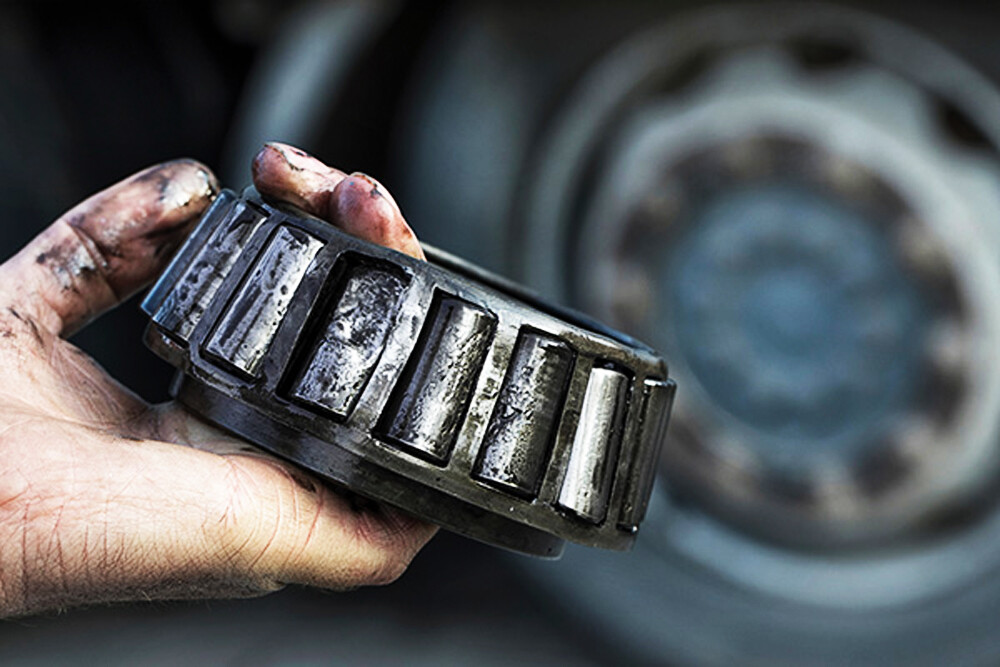
Correct bearing installation is one of the most crucial steps in ensuring long-term reliability and performance. Even the highest-quality bearing can fail prematurely if installed improperly. In industrial environments, where precision and uptime are critical, understanding and preventing common installation errors can make the difference between efficiency and costly downtime.
Why Proper Installation Matters
A bearing’s purpose is to support radial and axial loads while minimizing friction between moving parts. However, for it to perform effectively, every surface and contact area must work within precise tolerances.
Improper installation can distort geometry, increase friction, cause overheating, and drastically shorten service life. Most installation errors arise from rushed procedures, unsuitable tools, or insufficient attention to detail.
The Most Common Bearing Installation Mistakes
1. Using the Wrong Bearing Type
Selecting a bearing that does not match the application is one of the most frequent mistakes. Each type of bearing — ball, cylindrical roller, tapered, or spherical — is designed for specific load, speed, and environmental conditions.
Prevention: Always evaluate load type, temperature, speed, and lubrication requirements before selection.
2. Using Incorrect Tools
Applying force with hammers or screwdrivers can permanently damage bearing races and rolling elements.
Prevention: Use proper mounting kits, fitting tools, and extractors designed for controlled force distribution.
3. Inadequate Cleaning of Components
Dust, debris, or old grease can cause misalignment and uneven load distribution.
Prevention: Clean and inspect shafts and housings thoroughly before installation.
4. Applying Force to the Wrong Ring
Forcing the bearing onto a shaft or into a housing from the wrong side damages internal elements.
Prevention: Apply mounting pressure only to the ring being fitted — inner ring for shaft fits, outer ring for housing fits.
5. Ignoring Internal Clearance
Incorrect fits can alter bearing clearance, increasing temperature and friction.
Prevention: Check internal clearance before and after mounting, adjusting for interference fits as needed.
6. Shaft and Housing Misalignment
Even slight misalignment generates uneven loads, noise, and vibration.
Prevention: Check alignment using dial indicators or laser tools and ensure support surfaces are flat and parallel.
7. Improper Lubrication
Too much or too little lubricant is equally harmful. Excess grease causes overheating; too little leads to metal-to-metal contact.
Prevention: Apply the correct lubricant type and amount based on bearing design and operating conditions.
8. Incorrect Heating During Mounting
Overheating a bearing can alter its hardness and compromise surface treatments.
Prevention: Use induction heaters or controlled ovens, limiting temperatures to 80–90°C.
9. Skipping Final Checks
Failing to verify rotation and smoothness after mounting can hide assembly errors.
Prevention: Rotate manually, check for vibration, and listen for unusual noise before running under load.
Best Installation Practices
-
Prepare the workspace and tools properly
-
Use dedicated and clean mounting equipment
-
Verify shaft and housing dimensions
-
Follow recommended tolerances
-
Apply uniform force during fitting
-
Ensure proper lubrication
-
Perform functional tests before full operation
Economic Impact of Installation Errors
A minor mounting error can result in serious consequences:
-
unplanned downtime,
-
higher maintenance costs,
-
premature bearing failure,
-
reduced productivity,
-
damage to adjacent components.
Proper training, precision tools, and standardized procedures are essential investments for any maintenance team.
Need help with bearing selection? Contact our technical team for a free consultation.
Related articles