
In industrial automation, precision, efficiency, and smooth motion are key factors in ensuring high performance and reliability.
SFERAX linear bearings are engineered to deliver exceptional results in applications that require controlled linear movement, minimal friction, and long service life.
These components are widely used in CNC machines, robotic systems, assembly lines, and automated handling equipment, where precision and durability are critical to maintaining production quality and efficiency.
What Linear Bearings Are
A linear bearing allows a sliding component, such as a carriage or shaft, to move along a guide with minimal friction.
It ensures accurate and repeatable motion, even under heavy loads or continuous operation.
Compared to traditional sliding systems, linear bearings reduce energy loss, heat generation, and mechanical wear, extending the lifespan of machinery.
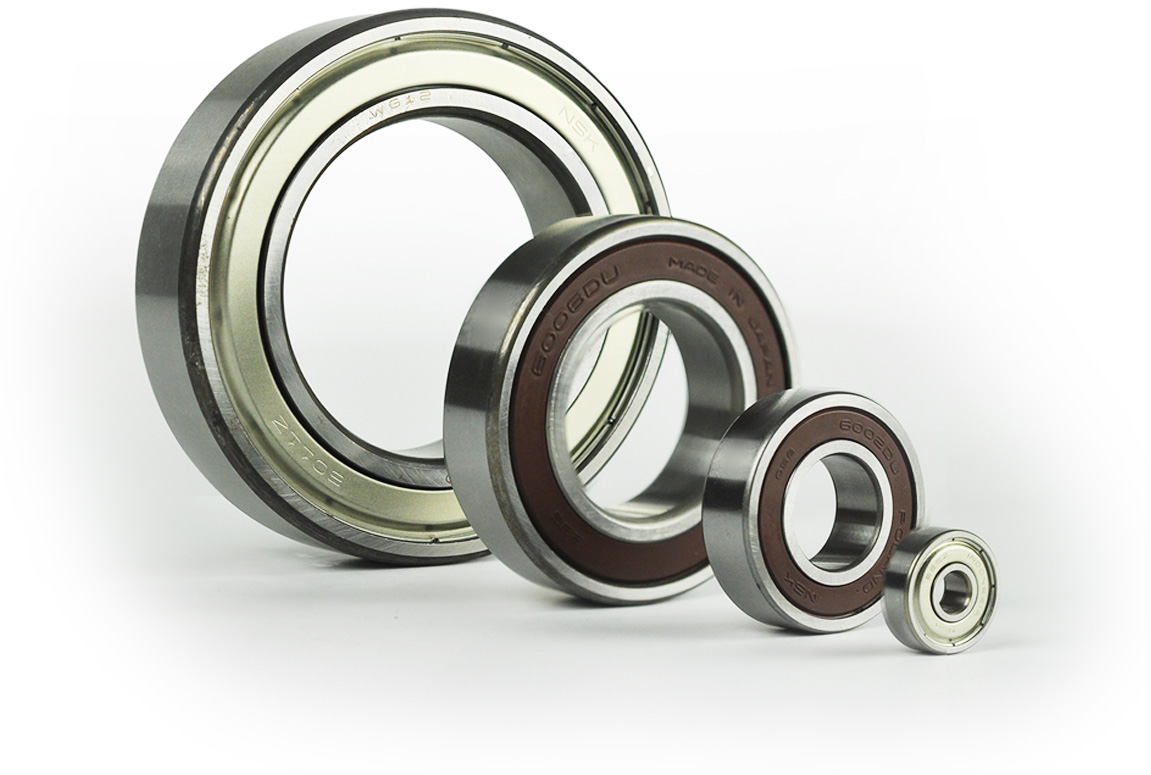
SFERAX manufactures various types of linear bearings — ball, roller, and special models — each designed to meet specific industrial needs, from small automation systems to heavy-duty machinery.
Key Features of SFERAX Linear Bearings
-
High dimensional accuracy for consistent, precise motion.
-
Low-friction design, ensuring smooth and quiet operation.
-
Extended service life, thanks to hardened steels and advanced surface treatments.
-
Flexible mounting options, including flanged and self-aligning versions.
-
Reliable performance, even in demanding industrial environments.
Types of SFERAX Linear Bearings
Ball-type linear bearings
Designed for light to medium loads, they ensure fast, precise, and low-friction linear motion.
Commonly used in CNC machinery, robotics, and laboratory equipment.
Roller-type linear bearings
These are suitable for heavy loads and high stiffness, distributing forces evenly along the contact surface.
Used in industrial assembly lines, presses, and automation systems that require strong load-bearing capacity.
Special and custom models
SFERAX offers customized versions for extreme environments, high temperatures, or contamination exposure.
Variants with seals or built-in lubrication systems further reduce maintenance requirements.
Advantages in Industrial Automation
-
Higher motion accuracy with reduced vibration and play.
-
Improved energy efficiency due to minimal friction.
-
Reduced downtime and lower maintenance frequency.
-
Low noise levels, ideal for modern production environments.
-
Adaptability across different automation applications.
Application Fields
Machine tools and machining centers
SFERAX linear bearings ensure accurate movement of machine axes and excellent repeatability, essential in precision machining.
Automated production lines
Their smooth and consistent movement supports efficient material handling and assembly, optimizing productivity.
Robotics and automation systems
In robotic arms and pick-and-place units, SFERAX bearings enable precise positioning, fast response, and stable operation.
Electronics and medical industries
Low-friction and high-purity versions are suitable for sensitive environments, such as laboratory automation and diagnostic equipment.
How to Choose the Right SFERAX Bearing
Consider these parameters:
-
Load and direction of forces — radial, axial, or combined.
-
Speed and frequency of motion — ball bearings for rapid cycles, roller types for higher loads.
-
Precision requirements — tight-tolerance bearings for high-accuracy systems.
-
Operating conditions — use sealed versions in dusty or humid environments.
-
Mounting space — compact or flanged designs optimize installation in limited spaces.
Maintenance
Proper maintenance ensures long-lasting performance:
-
Keep bearings lubricated with suitable grease or oil.
-
Clean guides and shafts regularly.
-
Check for signs of wear or play.
-
Schedule replacements at regular intervals in high-cycle applications.
Conclusion
SFERAX linear bearings are a benchmark in motion control and industrial automation.
Their combination of precision, rigidity, and versatility makes them essential components in high-performance systems.
Choosing SFERAX means opting for efficiency, reliability, and long-term productivity, ensuring the success of modern automated operations.