
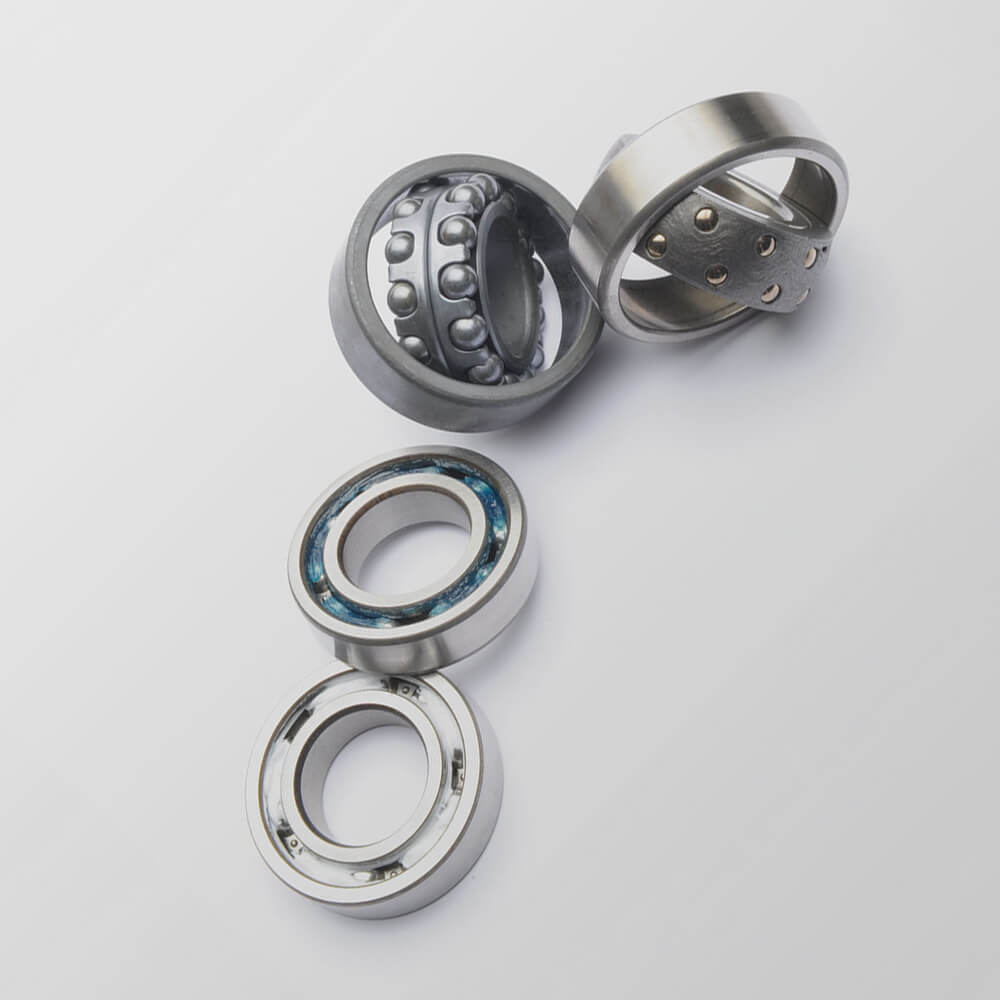
Bearings used in high-temperature environments must deliver exceptional performance, wear resistance, and long service life. Industries such as steel mills, industrial furnaces, petrochemical plants, and automotive manufacturing require solutions that can function reliably under extreme heat conditions, minimizing failures and reducing maintenance.
But what factors should be considered when selecting a bearing for high-temperature applications? In this article, we’ll explore the key characteristics, the best materials, and the available solutions on the market.
1. Why Are High Temperatures a Problem for Bearings?
When a bearing operates at high temperatures, it can suffer from several negative effects:
🔥 Reduced material hardness → Metals lose some of their strength at high temperatures, increasing the risk of deformation.
🔥 Lubrication degradation → Standard oils and greases evaporate or break down quickly at high temperatures, reducing lubrication efficiency.
🔥 Thermal expansion → Materials expand with heat, affecting bearing tolerance and clearance.
🔥 Oxidation and corrosion → Heat accelerates oxidation, especially in environments with humidity or aggressive chemicals.
Choosing the right bearing helps minimize these risks and ensure long-term reliability.
2. What Materials Are Best for High-Temperature Bearings?
Bearings for high-temperature applications need to be made of heat-resistant, low-expansion, and chemically stable materials.
🔹 Heat-resistant steel – Special alloys, such as stainless steel or chromium steel, maintain their hardness above 300°C.
🔹 Ceramic bearings – Ideal for extreme temperatures (over 600°C), they resist corrosion and do not require lubrication.
🔹 Bronze and special alloys – Provide good wear resistance and are suitable for harsh conditions.
🔹 Heat-resistant coatings – Some bearings are treated with ceramic or titanium nitride coatings to increase heat resistance.
The material choice depends on the operating temperature range and environmental conditions.
3. Lubrication for High-Temperature Bearings
Lubrication is one of the most critical aspects when using bearings in high-temperature environments.
✅ PFPE or silicone-based greases → Withstand temperatures above 250°C without evaporating or degrading.
✅ Solid lubrication (graphite or molybdenum disulfide) → Ideal for applications over 400°C, where traditional lubricants fail.
✅ Self-lubricating bearings → Some bearings are designed to operate without external lubrication, using low-friction materials.
Choosing the right lubricant or a self-lubricating bearing is essential to prevent premature wear and unexpected failures.
4. Types of Bearings for High-Temperature Applications
🔹 High-Temperature Ball Bearings
- Used in electric motors, industrial furnaces, pumps, and fans.
- Made of stainless steel, ceramic, or with heat-resistant coatings.
🔹 Cylindrical and Tapered Roller Bearings
- Ideal for high-load and high-temperature applications, such as in the metallurgical industry.
- Often coated with anti-wear treatments and lubricated with special greases.
🔹 Ceramic Bearings
- Withstand temperatures above 600°C and do not require lubrication.
- Used in aerospace applications and extreme industrial environments.
🔹 Dry-Running and Self-Lubricating Bearings
- Perfect for applications where traditional lubrication is not possible.
- Made from sintered bronze or advanced polymers.
5. Industries Using High-Temperature Bearings
Bearings designed for high-temperature environments are used in various industrial sectors, including:
🏭 Steel and Metallurgical Industry → Machinery for metal processing, rolling mills, and furnaces.
🚗 Automotive → Exhaust systems, turbines, high-performance electric motors.
🔥 Industrial Furnaces and Chemical Plants → Pumps, fans, and conveyors operating in extreme conditions.
🛠 Aerospace and Defense → Applications exposed to extreme temperature variations and high friction conditions.
6. How to Choose the Right Bearing for Your Application?
When selecting a bearing for high-temperature applications, it’s essential to consider:
✔️ Operating temperature range → Determine the maximum temperature the bearing must withstand.
✔️ Load and speed type → Choose between ball bearings, roller bearings, or ceramic bearings based on your application’s needs.
✔️ Materials and lubrication → Opt for heat-resistant materials and check if special lubrication is required.
✔️ Environmental conditions → Consider humidity, dust, and chemicals that could affect bearing life.
Conclusion
Choosing the right bearing for high-temperature environments is essential to ensure optimal performance and reduce maintenance costs. Carefully evaluating materials, lubrication, and operating temperature range will help you find the best solution for your machinery.
🔧 Need high-temperature bearings?
📲 Explore our range of heat-resistant bearings and find the perfect solution for your business!