
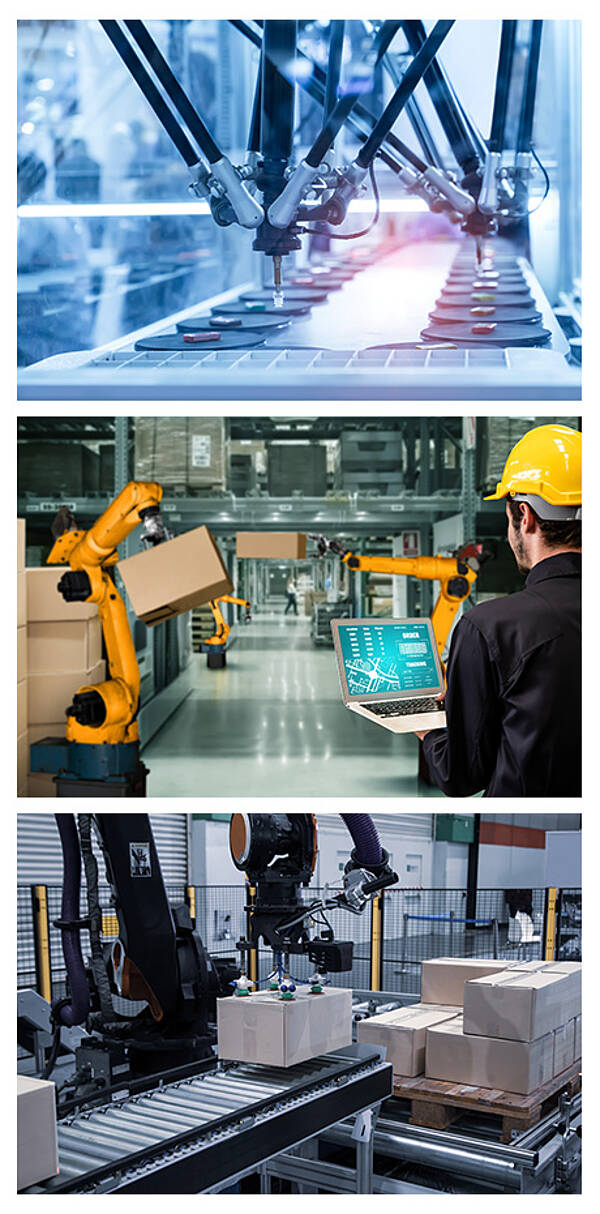
The global bearing industry is in the middle of its longest sustained growth cycle in two decades. The latest figures put the 2026 market size at USD 151.8 billion, with consensus forecasts pointing to USD 301 billion by 2033 — a compound annual growth rate of 9.8%. This is not a single-driver story: four structural forces are working in parallel.
Driver 1 — Electrification of mobility
The shift from internal combustion to electric powertrains is reshaping the demand pattern. EV wheel-hub units require insulated bearings to prevent shaft currents from etching raceways, and EV traction motors need low-friction, high-speed ball bearings capable of running at 18,000-20,000 rpm. Both are higher-margin products than the equivalent ICE-era references they replace.
Driver 2 — Wind energy and renewable infrastructure
Roller bearings dominate wind turbine main shafts, pitch and yaw mechanisms, and gearbox stages — collectively the largest single application by value per megawatt installed. With global wind capacity additions expected to remain above 110 GW per year through 2030, the bearing volume locked in by every new turbine generation is substantial.
Driver 3 — Industrial robotics and humanoid platforms
The industrial robotics market itself is projected to grow from USD 54.3B (2026) to USD 94.4B (2031) at an 11.7% CAGR. Every robot arm joint contains crossed-roller bearings, harmonic drive components, and precision angular contact bearings. The arrival of humanoid platforms — Schaeffler unveiled a planetary gear actuator dedicated to humanoid joints at CES 2026 — adds a new structurally growing demand pool.
Driver 4 — Linear motion and smart factories
The linear motion systems market is on track from USD 12.84B (2025) to USD 22.07B (2033), a 7% CAGR. Within that, linear motors are the fastest-growing sub-segment at 8.75% CAGR, driven by adoption in semiconductor manufacturing and high-throughput automation.
What this means for distributors and OEMs
- The standard catalogue is being repriced upward. Steel at $1,100+/ton, 50% US tariffs on imported steel and aluminum (in force since June 2025), and rising bearing-grade alloy premiums are flowing into list prices through 2026.
- Higher-tech products are taking share. Insulated, hybrid (ceramic-rolling-element), and instrumented bearings are growing faster than the market average.
- Consolidation accelerates. The NSK + NTN merger announcement (May 2026) and SKF’s Automotive spin-off are early signals; expect further M&A across the next 24 months.
- Lead-time discipline matters. Schaeffler’s capacity expansion in Yinchuan and SKF’s segmentation push are designed to absorb demand spikes, but stocking depth on critical series remains a defensive lever.
Three scenarios for the second half of 2026
Base case — steady demand from industrial Europe, modest pricing pressure, supply chain stable. Distributors maintain 60-90 day stocks on top-200 SKUs.
Upside — accelerated EV bearing adoption + new wind project pipeline. Insulated and large-diameter bearings constrained; price erosion stops on those families.
Downside — global trade friction worsens, EU automotive output softens, Chinese supply floods commodity series. Pricing pressure on standard deep groove and tapered roller.
We will publish a quarterly update on these scenarios — bookmark this page or follow our newsletter.
Steel chemistry and bearing-grade alloy economics
Bearing-grade 100Cr6 (52100) steel is not commodity hot-rolled coil. It requires cleaner steel chemistry — tighter inclusion control, lower hydrogen content, controlled microstructure — produced under more demanding manufacturing protocols. The alloy premium over commodity steel has been widening since 2023 and is forecast to continue widening through the end of the decade as demand for cleaner steel grades grows faster than supply.
For bearing manufacturers, the alloy premium flows directly into cost-of-goods-sold. For distributors and OEMs, it flows into list prices on a 6-18 month lag. The bearing market’s projected 9.8% CAGR is partially nominal price effect rather than pure volume growth — but even adjusting for price, real volume growth remains in the high single digits.
The EV bearing supply chain reshuffling
Every EV produced replaces a vehicle with several dozen bearings with a vehicle requiring fewer but higher-value bearings. Net per-vehicle bearing revenue is broadly comparable; per-vehicle margin is higher; the supplier mix shifts toward manufacturers with insulated-bearing and high-speed-bearing capabilities.
For European bearing distributors serving the automotive aftermarket, the implications are gradual but real. The ICE-vehicle replacement bearing market shrinks slowly through 2030; the EV-specific bearing market grows rapidly. The transition years (2026-2030) see both markets active simultaneously — building EV cross-reference databases now positions distributors for the post-2030 market structure.
The wind energy bearing constraint
Wind turbines consume large-diameter bearings — main shaft spherical roller, pitch slewing rings (one per blade), yaw slewing ring (one per nacelle), gearbox stages, generator bearings. The total bearing tonnage per gigawatt of installed capacity is substantial, and the supply chain is concentrated among a small number of suppliers capable of producing wind-grade specifications.
Lead times on wind-grade slewing rings remain at 9-18 months. Capacity expansions are in progress but cannot match the demand growth from the projected 110+ GW/year of new wind capacity globally through 2030. The wind segment is structurally supply-constrained — and that supply constraint flows into pricing discipline that benefits the leading suppliers.
Industrial robotics and the crossed-roller bearing market
Crossed-roller bearings are an unusual segment of the bearing market — small in absolute size but high in value per unit because of the precision required. They sit inside every industrial robot joint, every cobot articulation, every precision indexing mechanism, every machine tool turret. As industrial robotics grows from $54B (2026) to $94B (2031), the crossed-roller bearing market grows in proportion.
The supplier landscape is concentrated: THK, Schaeffler INA, NSK, IKO dominate global supply. Chinese suppliers are entering at the lower end with rapidly improving quality. For European distributors, building cross-reference databases for crossed-roller bearings — across multiple suppliers — is becoming a competitive necessity.
The smart bearing inflection
The bearing industry’s transition from selling components to selling reliability systems is the defining strategic shift of the decade. SKF Insight, Schaeffler OPTIME, NSK SAT — every major manufacturer has built or acquired a smart-bearing platform. The platforms combine instrumented bearings (integrated sensors), cloud-based analytics (AI condition monitoring), and prescriptive workflows (work order automation).
For end-users, the implications are gradual but consequential. Procurement evolves from selecting bearings to selecting reliability systems. Total cost of ownership becomes a procurement metric. Supplier engagement shifts toward multi-year relationships rather than transactional pricing.
What this means for the next five years
The bearing market projection ($151.8B → $301B) assumes continuation of current trends. Three things would change the trajectory upward: faster EV adoption, accelerated humanoid robotics deployment, or sustained wind energy capacity addition above the current forecast. Three things would change it downward: global recession affecting industrial production, supply chain disruption affecting bearing manufacturing, or trade barrier escalation reshaping pricing.
For distributors and OEMs operating in this environment, scenario-based planning rather than point forecasting is the appropriate posture. Build supplier substitution agility, condition monitoring capability, and master data discipline — these pay back regardless of which scenario unfolds.
The emerging humanoid robotics demand
Humanoid robotics is still nascent in 2026 but the growth trajectory is steep. Schaeffler’s CES 2026 unveiling of a dedicated planetary gear actuator signals the major bearing manufacturers’ positioning for this market. Each humanoid contains 30-50 actuated joints; each joint contains a bearing pack of crossed-roller and angular contact bearings. Bill-of-materials per humanoid is dominated by motion components.
For European bearing distributors, the humanoid market opportunity is two-fold: serving the humanoid OEMs directly (limited near-term, longer-term significant), and serving the aftermarket that emerges as humanoids reach scale (longer-term, large potential). Building cross-references and qualifying early on the relevant bearing categories positions distributors for the post-2028 humanoid aftermarket.
Why 2026-2027 is a particularly important window
The next 18 months will determine the bearing industry structure for the rest of the decade. NSK+NTN integration completing in October 2027 reshapes the competitive landscape. SKF Automotive separation creates a new pure-play industrial supplier. Schaeffler’s capacity ramp shifts standard-catalogue economics. The decisions distributors and OEMs make during this window — supplier qualification, framework agreements, technology platform selection — set their competitive position for years to come.
What the data through 2025 actually showed
The 2024-2025 market data validated the structural growth thesis. European industrial demand recovered from the 2023 trough; EV bearing adoption accelerated; wind energy project pipelines unlocked. The forecast trajectory to 2033 reflects continuation of these documented trends rather than speculation about future technology adoption. The base case is the most likely outcome.
Industry context and supplier alignment
The European bearing industry continues to consolidate around fewer larger suppliers, more sophisticated technology platforms, and tighter integration between bearing supply and reliability services. For customers, the practical implication is supplier selection becoming a longer-term strategic decision rather than a transactional cost optimisation. The supplier relationship in 2026 carries forward a multi-year roadmap of product evolution, technology integration, and engineering partnership.
Customers who build deliberate, multi-source supplier relationships position themselves to navigate this consolidation effectively. The ability to substitute between suppliers — supported by clean cross-reference data and qualified engineering equivalence — protects against any single supplier’s strategic missteps and captures the competitive value of supplier rivalry while it persists.
Related guides on Eurobearing
- The Evolution of the Bearing Market in Europe
- How Rising Raw Material Costs Impact the Bearing Market
- Perspectives for Growth in the Industrial Bearings Market
Need help choosing the right bearing for your application? Our technical team can support you with selection, cross-references, and lead-time information.
Need help with bearing selection? Contact our technical team for a free consultation.
Related articles