
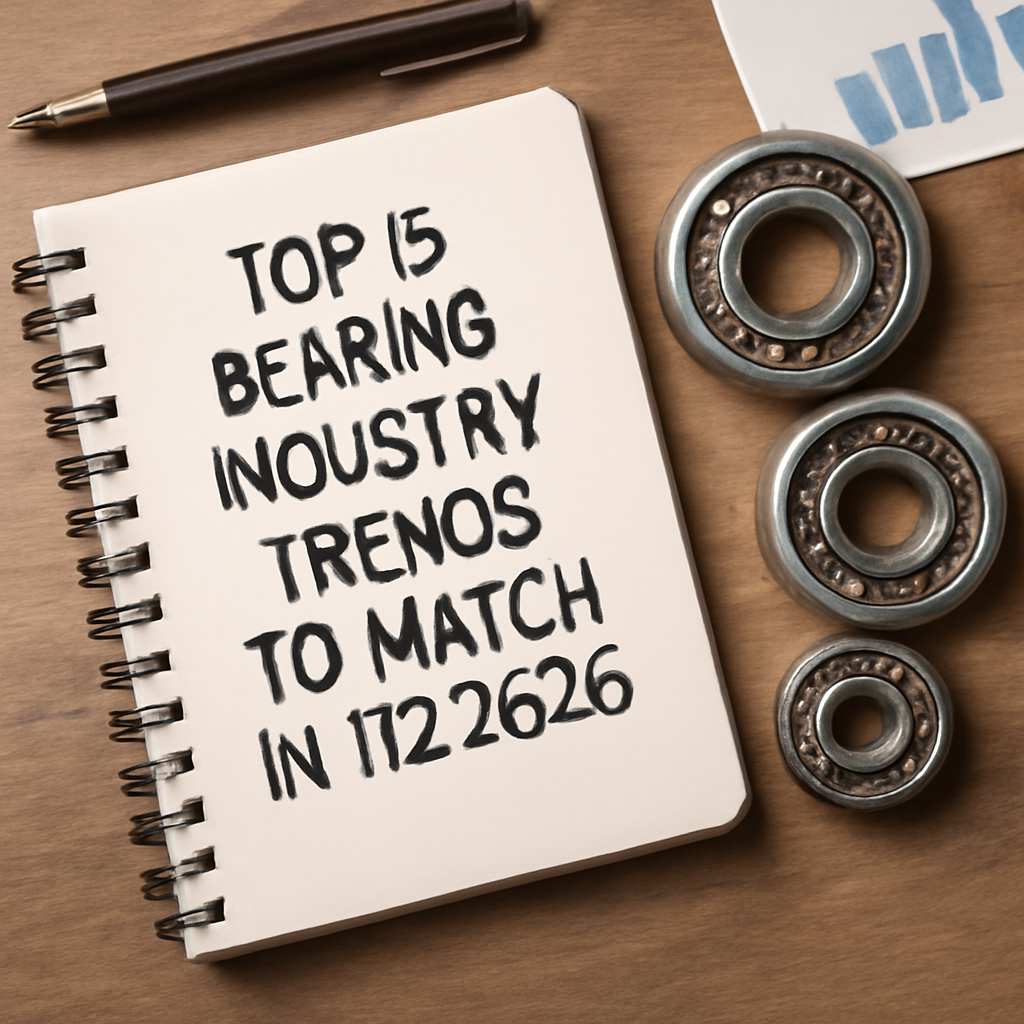
The bearing industry enters the second half of 2026 in the middle of one of its most active transition periods in decades. Five trends will define what distributors, OEMs and end-users actually see in their daily business between July and December. Here is the watch list.
1. The NSK + NTN antitrust process
The integration MoU signed 12 May 2026 needs clearance in at least five jurisdictions. Filings expected in Q3 2026. EU Phase 1 clearance or escalation to Phase 2 will be the most-watched milestone. Possible remedy outcomes include divestitures in wheel-hub automotive segments. Track every major filing milestone.
2. Schaeffler Yinchuan capacity ramp-up
New production lines coming online through H2 2026, ultimately doubling FAG deep groove ball bearing capacity. The practical effect: lead times on standard catalogue parts (6200, 6300 families) should normalise. Distributors can re-baseline safety stocks downward on Yinchuan-produced families.
3. SKF Automotive spin-off mechanics
Restated 2024-2025 segment financials published. The actual legal separation timeline and structure to be announced. For automotive customers, the practical question is which entity will hold which OEM programmes after the spin-off.
4. EU industrial demand recovery
Improving indicators in early 2026. H2 will tell whether the recovery is real and sustained. A genuine recovery against tight inventory positions produces predictable consequences: longer lead times on critical SKUs, opportunistic price spikes, distribution-channel pre-positioning. Distributors should be prepared.
5. Predictive maintenance commercial inflection
The 85% cost reduction in IoT vibration sensors since 2019 has reached the point where mid-size plants can justify deployments on operating budgets. Combined with AI-based analytics and prescriptive maintenance roadmaps, the next 6 months should see meaningful commercial acceleration. The 65% maintenance team AI adoption forecast for year-end 2026 will be tested.
Bonus watch: large-bearing supply on wind
Slewing ring lead times remain long. Capacity expansions in progress at major suppliers but the bottleneck will persist into 2027. Wind turbine OEM project schedules and aftermarket retrofit programmes both feel this constraint.
Conclusion
H2 2026 is not a routine period for the bearing industry. Distributors and end-users who actively monitor these five trends — and act on the early signals — will be positioned to capture opportunities that purely reactive players will miss.
Related guides
- NSK+NTN Antitrust
- Schaeffler Yinchuan
- SKF 2026 Structure
- EU Distributors Stockpiling
- Bearing Industry 2026 Status
Need help with bearing selection? Our team supports you with cross-references and lead-times.