
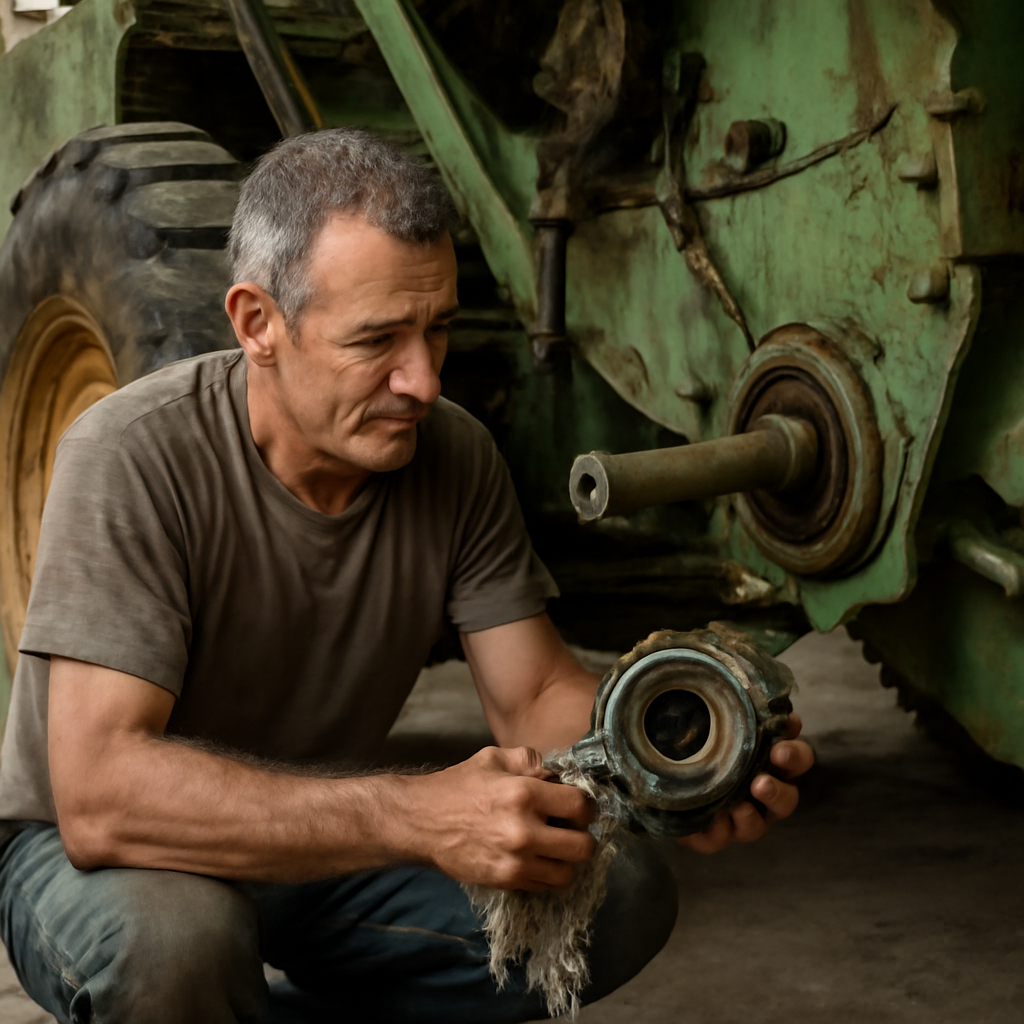
A French farmer running four combine harvesters through the Beauce plains north of Orleans documented two seasons of combine harvester bearing failures across his fleet. The rebuild diary reveals the practical bearing survival patterns that emerge across roughly 1,200 operating hours per machine per season. This piece walks through what the field data actually shows and how procurement decisions should reflect the realities of French wheat harvesting operations.
The fleet and the operations
The farmer runs four combine harvesters serving roughly 600 hectares of wheat and 200 hectares of rapeseed across the Beauce plains. Each combine operates 300 to 350 hours per season through July and August wheat harvest, then another 50 to 100 hours through September rapeseed harvest. Fleet turnover typically 8 to 12 years before combine replacement. Bearing replacement patterns emerge clearly over multiple seasons.
The header bearing failure pattern
Header bearings represent the highest bearing count and highest failure rate location on any combine. Fine wheat dust migrates through single-contact seals within 100 to 150 operating hours. The farmer’s rebuild diary shows 4 to 8 header bearing replacements per combine per season on average. The upgrade path is FKM double-contact seals on the header bearings, extending service life to full-season without replacement in most cases.
The threshing rotor bearing pattern
Threshing rotor bearings see the heaviest radial loads on the combine plus dust exposure. The rebuild diary shows 1 to 2 rotor bearing replacements per combine per season under normal use. Bearings running through wet or damp wheat conditions fail more frequently. The specification for these bearings typically 6210 to 6212 range with 2RS FKM sealed variants.
The grain elevator bearing pattern
Grain elevator drive bearings see moderate loads with continuous dust exposure. Failure rate is 2 to 4 replacements per combine per season. These bearings often get overlooked in pre-season inspection because they are less accessible. The upgrade path is standard 2RS sealed variants with attention to seal condition during periodic maintenance.
The straw walker bearing pattern
Straw walker bearings on combine designs that use straw walker separation see specific reciprocating motion loading. Failure rate is 1 to 3 replacements per season. The specification typically bearings with clearance selection for the reciprocating loading pattern.
The cleaning shoe and sieve bearing pattern
Cleaning shoe and sieve drive bearings see vibration loading with dust exposure. Failure rate is 1 to 2 replacements per season. These bearings typically fail from vibration-induced cage damage rather than from contamination directly.
Total annual bearing consumption per combine
The farmer’s diary aggregates to roughly 10 to 18 bearing replacements per combine per season across the four operating machines. This translates to 40 to 72 bearings per season for the fleet. Add matching CORTECO shaft seals in the standard OEM sizes and the total annual maintenance parts investment reaches 3,000 to 5,000 euros per combine per season.
The pre-season inspection ROI
Pre-season inspection catches roughly 30 to 40 percent of bearings that would fail during the season if left alone. The inspection labor cost per combine is approximately 4 to 6 hours at 45 euros per hour — 180 to 270 euros. The avoided emergency repair labor and downtime cost during harvest is roughly 2,000 to 4,000 euros per prevented failure. The inspection ROI is easily justified.
Cross-brand bearing supplier considerations
The farmer sources bearings through French agricultural distributors carrying SKF, FAG and NADELLA specifically for combine applications. Cross-brand equivalency is generally clean on standard bearing designations. Pricing varies by 10 to 20 percent across the brands. The selection typically follows distributor availability and quick response rather than absolute price optimization.
The combine harvester aftermarket pattern for French distributors
French agricultural distributors serving Beauce and other French wheat regions should carry header bearings in top 15 sizes with FKM seals, threshing rotor bearings in top 5 sizes, and CORTECO matching seals in standard sizes. This mix serves 90 percent of French combine aftermarket demand through the July-August harvest season.
The takeaway for procurement teams
Combine harvester bearing procurement follows a predictable seasonal pattern that repeats across French wheat farming operations. Match bearing specification to failure mechanism at each location. Push seal package upgrades where the standard fails within season. Enforce pre-season inspection discipline. Position CORTECO seal alongside bearing as complete rebuild kit. The seasonal pattern rewards distributors who understand the specific French farming reality rather than generic agricultural bearing suppliers.
Related coverage on Eurobearing
- Round Baler Bearings
- Rice Harvester Bearings
- Forage Harvester Bearings
- Agricultural Sector
- Bearing Storage
Need help stocking French combine harvester aftermarket kits? Our team supports European agricultural distributors. Book a free consultation.