
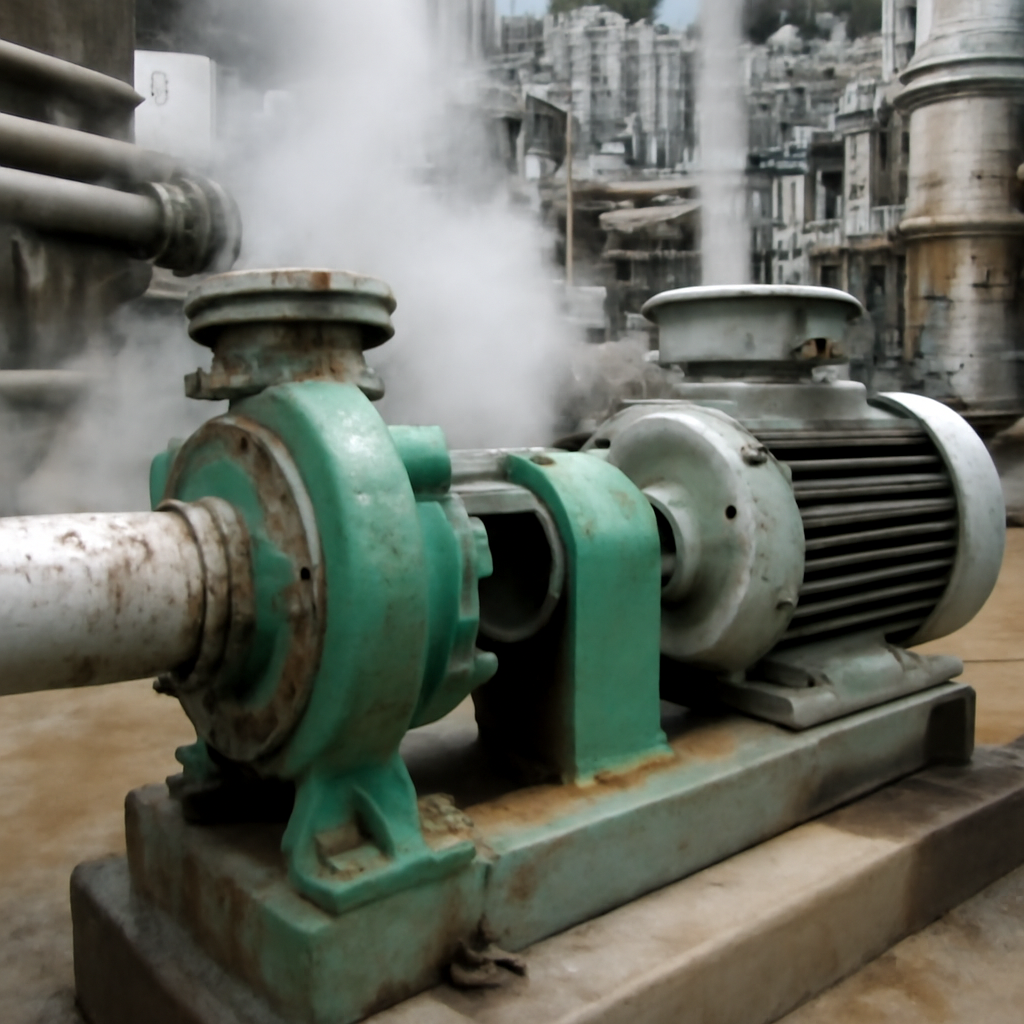
Chemical plant pump bearings operate in one of the most demanding industrial environments across European industry. The combination of corrosive vapours, elevated temperatures, extended continuous duty cycles and safety-critical operational requirements demands specific bearing specifications that generic industrial pump bearing selection does not address. This piece walks through the reliability considerations that European chemical plant procurement teams should build into their specification framework.
What corrosive vapour actually does to bearings
Corrosive vapours in chemical plant environments include hydrogen sulfide, chlorine derivatives, ammonia and various acid vapours depending on the specific process. These vapours penetrate standard bearing seals over time and attack the internal bearing components. Carbon steel bearing races develop surface corrosion within weeks in aggressive environments. Standard rubber seals soften and lose sealing effectiveness. The rolling-element bearing selection for chemical service requires specific material and sealing choices.
The material specification for corrosive environments
Standard bearing steel — SAE 52100 or equivalent European specifications — corrodes in chemical service environments. The upgrade paths include stainless steel bearings (440C or 316 depending on chemistry), ceramic hybrid bearings with silicon nitride rolling elements, and full ceramic bearings for the most demanding applications. Match the material to the specific chemistry rather than defaulting to a universal upgrade.
The sealing package for chemical service
Standard NBR nitrile seals degrade in most chemical service environments within weeks to months. The upgrade to FKM fluoroelastomer handles a broader chemistry range including moderate acids and caustics. FFKM perfluoroelastomer handles the most aggressive chemistries but at meaningfully higher cost. For the specific pump application, verify chemistry compatibility with the seal supplier data sheet before ordering.
The SKF chemical service range
SKF offers a chemical service bearing range with stainless steel construction, FKM or FFKM seals as specified, and appropriate lubrication for chemical service. The pricing is 2 to 5 times equivalent standard industrial bearings depending on the specific configuration. For critical process pump applications the payback justifies the cost through avoided unplanned shutdowns.
The TIMKEN and FAG chemical alternatives
TIMKEN and FAG offer competing chemical service bearing ranges with similar material and sealing options. Cross-brand competition delivers pricing flexibility on chemical service specifications that standard aftermarket bearings do not always show. For chemical plant procurement teams, cross-shopping across the three major suppliers on chemical service specifications typically produces meaningful savings.
The pump seal integration
Chemical service pumps typically use mechanical seals rather than lip seals for shaft sealing. The bearing seal serves as secondary containment behind the mechanical seal. This design provides margin against mechanical seal failure but does not eliminate the need for chemical-compatible bearing seal materials. Both sealing systems need to work together for reliable pump operation.
Lubrication for chemical service
Standard industrial bearing greases can react with process chemistry when vapour ingress occurs. The specification for chemical service typically calls for perfluoropolyether (PFPE) greases that resist chemical attack. These greases are meaningfully more expensive than standard greases but deliver reliable service life in chemical environments. Do not skip this specification.
The safety and regulatory considerations
European chemical plant operations fall under specific safety regulations that affect bearing procurement. ATEX zone classifications may require specific bearing designs to prevent ignition sources. REACH chemistry restrictions apply to bearing materials. The bearing procurement decision must align with the plant safety and regulatory framework, not just with technical performance.
The stocking pattern for chemical service distributors
Distributors serving European chemical plant aftermarket should carry stainless steel bearings from SKF chemical service range in the top 15 to 20 sizes for common pump applications. Add FKM shaft seals in matching sizes. Stock PFPE grease in appropriate packaging. This mix serves the majority of chemical service pump bearing aftermarket demand.
The takeaway for procurement teams
Chemical plant pump bearing procurement requires application-specific specification rather than standard industrial bearing selection. Match materials, sealing and lubrication to the specific chemistry exposure. Cross-shop across major suppliers on chemical service ranges. Align procurement with plant safety and regulatory framework. The specification cost is real but avoided unplanned shutdown cost is far greater on chemical service applications.
Related coverage on Eurobearing
- Food Industry Bearings
- Choosing Grease
- Ceramic Bearings Applications
- CORTECO on Top Shelves
- Schaeffler INA Stainless Insert
Need help specifying chemical service pump bearings? Our team supports European chemical plant aftermarket procurement. Book a free consultation.