
French manufacturing data is read differently from German data, and distributors who apply the same interpretation to both end up mis-stocking. Germany tells you about machinery and general industry; France tells you predominantly about two supply chains — automotive and aerospace — that consume very specific bearing categories. The French PMI July 2026 print is worth reading for what it says about those two, and largely ignorable for anything else.
Automotive is the signal inside the French number
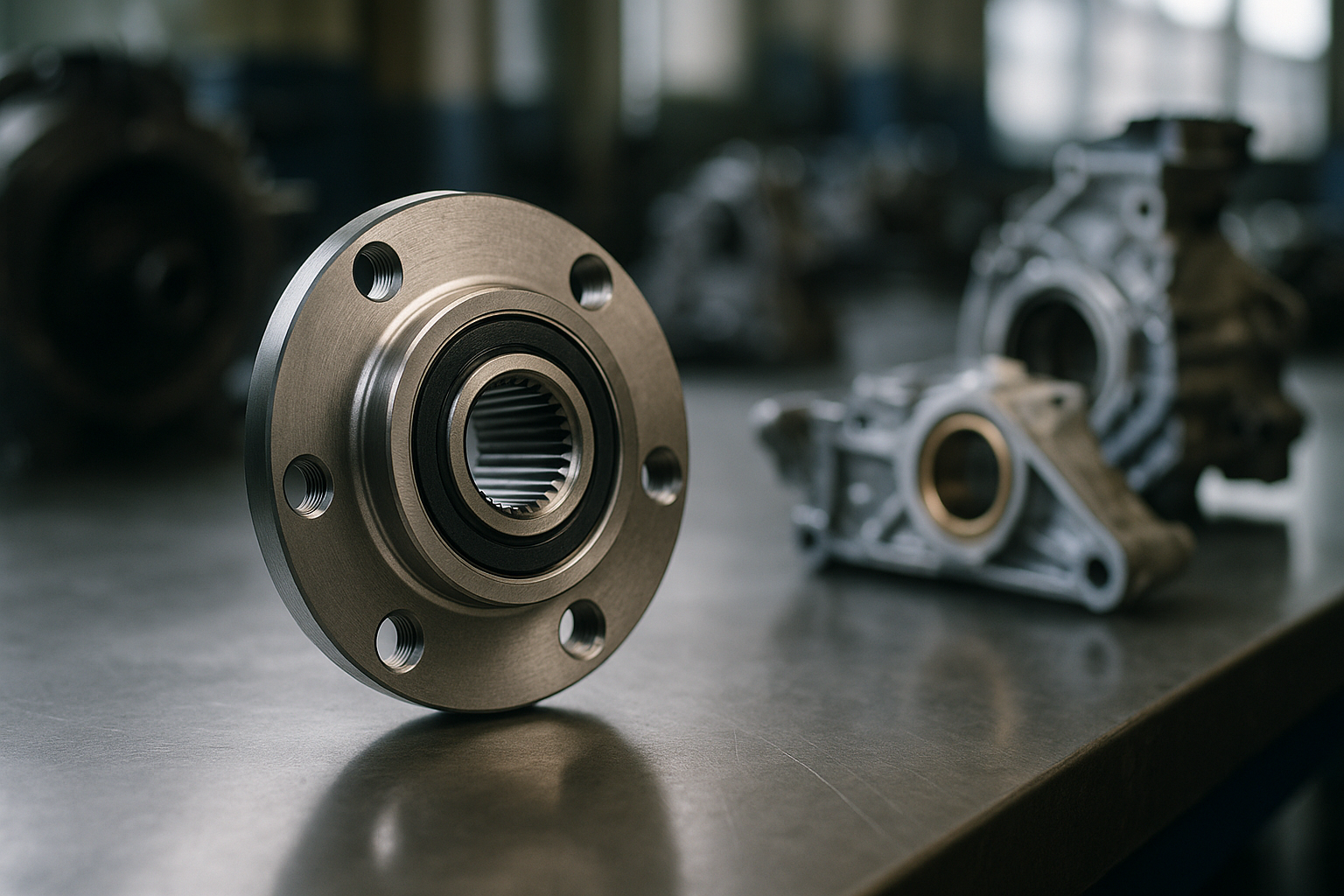
The French automotive supply chain runs deep: assembly plants, tier one suppliers, and a long tail of machining and component shops that consume bearings both in their own equipment and in what they produce. When the automotive sub-index moves, demand moves across wheel bearing units, transmission bearings, and the precision machining equipment that supplies the sector. What it does not tell you much about is heavy industrial, agricultural or process demand, which respond to entirely different drivers. Reading a weak French automotive print as general European weakness — or a strong one as recovery — is a mistake that shows up two quarters later in the wrong stock.
Aerospace behaves on its own timescale
The second French cluster is aerospace, and it responds to order books measured in years rather than to quarterly sentiment. Precision bearings, angular contact units and specialist executions serve this chain, with qualification requirements that make substitution slow and supplier relationships durable. A PMI movement rarely changes aerospace demand in the same quarter, which means the sub-index is a poor short-term indicator for that category even when it is a good one for automotive. Distributors serving both need to separate the two rather than treating the national number as a single signal.
What to do with a weak print
Reduce exposure on automotive-linked categories specifically rather than across the board, and resist the temptation to extrapolate to industrial lines that are driven by different customers. Automotive weakness also tends to arrive alongside price pressure on standard specifications, because the tier suppliers under margin pressure push it up the chain. The categories most exposed are the deep groove ball bearings and taper roller ranges, where substitution options are widest and the customer knows it.
Reading it against the European picture
The useful exercise is comparing the French print against the German and Italian equivalents in the same month. All three moving together indicates a European cycle and justifies a portfolio-level response. France diverging from the other two — which happens more often than the headlines suggest, because the sector mix differs so much — indicates something specific to the automotive or aerospace chains and calls for a targeted adjustment instead. Our reading of the German side is in the August production sector breakdown, and the aggregate European position in the August manufacturing PMI note. Taken together the three give a considerably more reliable picture than any one of them alone.
Reading national data into category-level stocking decisions? Our team supports European bearing distributors on demand analysis and inventory planning. Book a free consultation.