
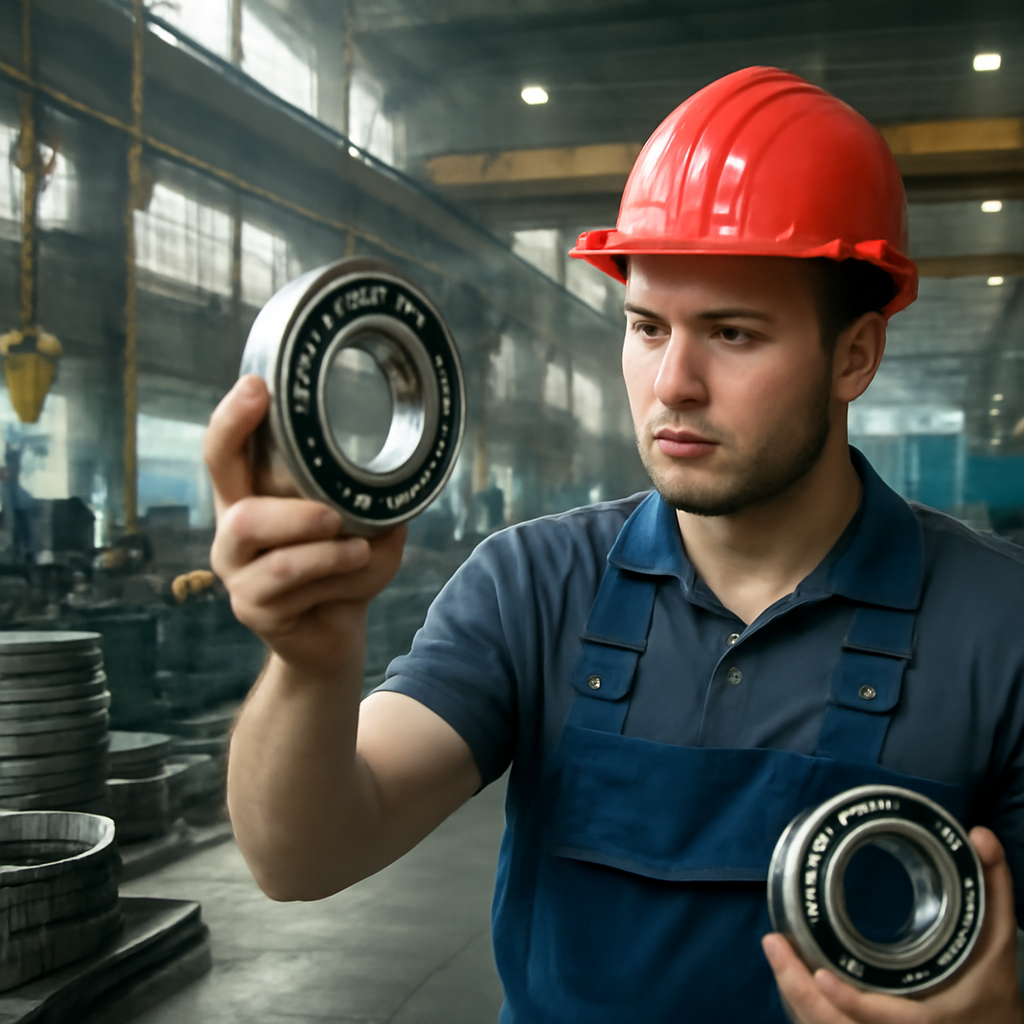
Poland’s industrial growth trajectory through 2024-2026 has quietly outpaced most of Western Europe, and the growth has translated into meaningful bearing aftermarket demand expansion. Understanding which bearing brands are gaining share in the Polish market — and why — tells procurement teams something useful about how the broader European bearing industry is shifting geographically. This piece walks through the Polish market dynamics.
The Polish industrial context
Poland’s industrial sector has been the strongest performer in the European Union through 2024-2026. Manufacturing PMI has stayed above 50 consistently while Germany and other Western European markets have contracted. Poland has become the assembly hub for many European industrial products, benefiting from labour cost advantages and proximity to Western European markets.
Which brands are gaining Polish share
Three brand categories are gaining share in Polish bearing aftermarket. First: European brands with local production or strong distributor networks including SKF, FAG, INA. Second: Asian brands making inroads through pricing including Chinese manufacturers competing on standard aftermarket. Third: specific specialty brands including NADELLA in French-heritage automotive OEM aftermarket applications where Polish assembly plants use French-specification designs.
Which brands are losing Polish share
Higher-priced European specialty brands without local production or distribution investment are losing share as Polish industrial customers optimise procurement costs. Some older established brands with limited investment in Polish market development have seen declining share. The pattern rewards brands that invest in local presence and lose brands that treat Poland as an afterthought market.
The Polish OEM specification pattern
Polish assembly plants for European industrial equipment often follow the specification of the German or Italian parent company. This maintains SKF, FAG and INA incumbent positions on Polish assembled equipment. Polish domestic industrial equipment shows more diversified specification including some Chinese brands and Polish-domestic assembly.
The rolling-element bearing distribution channel
Polish bearing distribution has consolidated over the past decade with several regional distributors reaching national scale. These distributors serve both Polish OEM specifications and aftermarket demand. Cross-border competition from German and Czech distributors serving Polish customers has intensified through the Schengen area customs environment.
The pricing dynamics
Polish aftermarket bearing pricing sits 3 to 8 percent below equivalent German pricing at distributor level. The gap reflects both labour cost differences and specific competition from Asian brands that has not established as strongly in German markets. Cross-shopping between Polish and Western European distributors produces meaningful savings for larger Polish industrial customers.
The mechanical engineering sector specifically
Polish mechanical engineering has been growing strongly across machine tools, packaging equipment and general industrial machinery. This growth translates directly to industrial bearing aftermarket demand. Distributors positioned in the Polish machine tool and packaging equipment channels have seen meaningful volume growth through 2024-2026.
The automotive sector considerations
Polish automotive assembly has expanded significantly for both traditional ICE and EV production. VW, Fiat, Opel and other European OEMs operate Polish plants that specify bearings from established European aftermarket suppliers. The automotive aftermarket in Poland tracks European automotive patterns rather than diverging into local specifications.
The 2026 outlook and procurement implications
Polish industrial growth is expected to continue through 2026 and into 2027. Bearing distributors positioned in Polish market channels should see continued growth even against weakness in Western European markets. Manufacturers investing in Polish market development capture disproportionate share growth. Manufacturers treating Poland as afterthought market lose share to competitors with better local positioning.
The takeaway for European procurement teams
Polish bearing market represents growth opportunity within an otherwise softening European industrial landscape. Manufacturers and distributors positioned for Polish growth capture share gains that offset Western European weakness. Procurement teams serving pan-European operations should invest in Polish distributor relationships to capture the growth dynamics. The Polish market matters more for pan-European bearing procurement than the aggregate European weakness narrative suggests.
Related coverage on Eurobearing
- European Bearing Distributor 2030
- Eurostat May IP Read
- Italian Mechanical Output
- German PMI July 2026
- UK Distribution Post-Brexit
Need help positioning for Polish bearing market growth? Our team supports pan-European procurement strategy. Book a free consultation.