
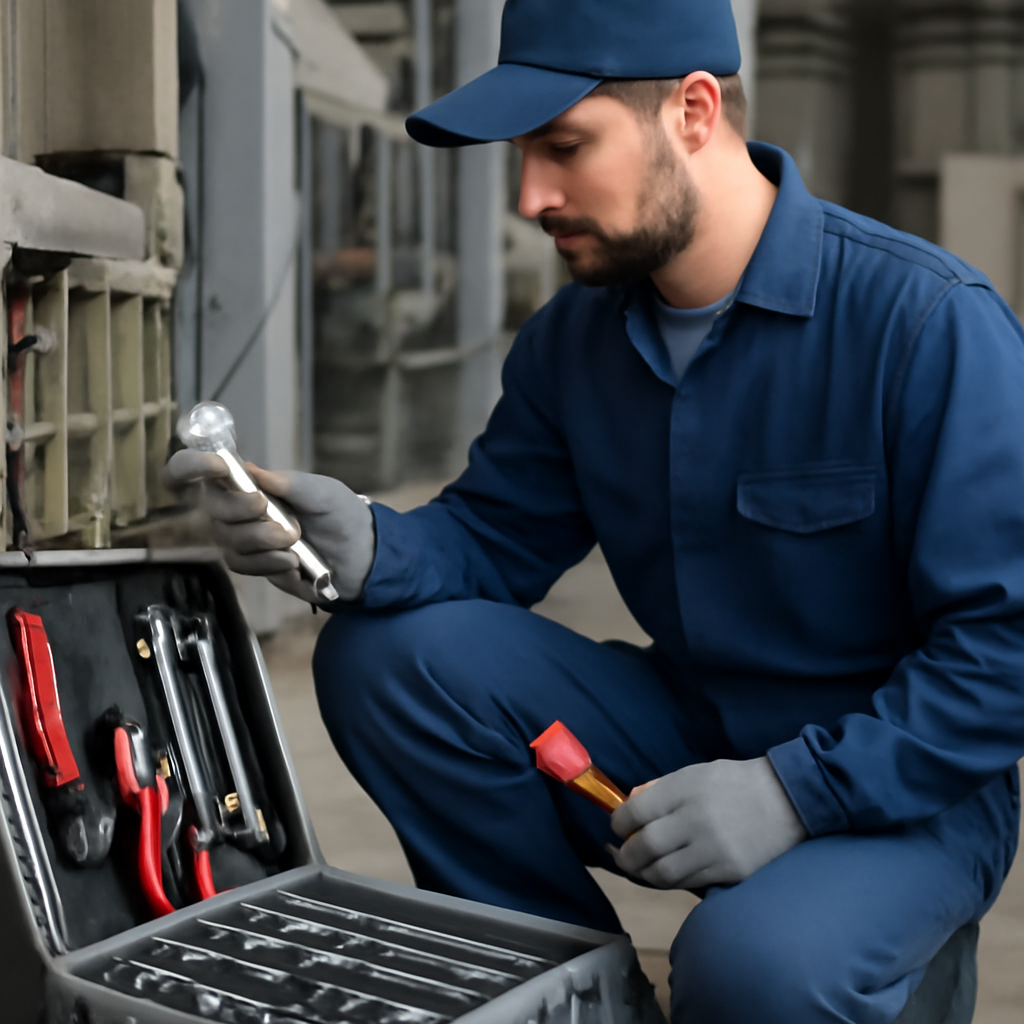
AB-TOOLS supplies one of the broadest professional hand tool ranges available through European industrial distribution. From standard wrenches and screwdrivers to specialised bearing and seal installation tools, the range covers the toolkit of the modern maintenance technician. This guide walks through the key categories and selection tips.
1. Why hand tool quality matters in maintenance
Cheap hand tools fail in the worst possible moments — wrench round-offs that damage fasteners, slipping screwdrivers that destroy heads, broken sockets that shorten patience. Professional-grade tools last decades, hold tolerances, and deliver the consistent feel that makes precision assembly possible.
2. The core categories AB-TOOLS covers
2.1 Wrenches and spanners
- Combination wrenches in metric and imperial.
- Adjustable wrenches.
- Pipe wrenches.
- Stillsons and chain wrenches.
- Torque wrenches (manual and electronic).
2.2 Sockets and ratchets
- 1/4″, 3/8″, 1/2″, 3/4″ drive systems.
- Standard, deep, impact-rated sockets.
- Extension bars, universal joints.
- Ratchet handles with various tooth counts for fine work.
2.3 Screwdrivers
- Slotted, Phillips, Pozidriv, Torx.
- ESD-safe variants for electronics work.
- Insulated 1000V for electrical work.
2.4 Pliers
- Combination, long-nose, side-cutters.
- Slip-joint, groove-joint (Channellock-style).
- Circlip (snap-ring) pliers in straight and bent configurations.
- Wire-stripping and crimping tools.
2.5 Specialised maintenance tools
- Bearing pullers and installation kits.
- Seal installers.
- O-ring picks and applicators.
- Filter wrenches.
- Tube cutters and flare tools.
2.6 Measuring tools
- Vernier callipers, digital callipers.
- Micrometers in metric and imperial.
- Feeler gauges.
- Bore gauges and depth gauges.
- Surface plates and squares.
2.7 Striking and cutting tools
- Ball-pein hammers, soft-faced hammers (brass, rubber, polyurethane).
- Cold chisels and centre punches.
- Files in various profiles and cuts.
- Hacksaws and jab saws.
3. Selection guidance
- Buy professional-grade for tools used daily. The cost difference vs commodity is small over a multi-year tool life.
- Buy mid-range for tools used occasionally. No need to over-invest in tools that come out twice a year.
- Buy specialised tools at OEM quality. Bearing pullers, seal installers, torque wrenches — these are where cheap tools cause expensive mistakes.
- Build the kit progressively. Start with core hand tools and add specialised tools as needs emerge.
4. Calibration discipline
Torque wrenches lose accuracy over time and use. Plan annual recalibration on torque wrenches used for critical assemblies. Document calibration dates on a tag attached to the tool.
5. Tool storage
Organised tool storage saves time and prevents loss. Tool boxes, roller cabinets, shadow boards — the choice depends on workshop layout and team size. The principle: every tool has a home, and it returns to it after use.
6. Where AB-TOOLS specifically shines
- Comprehensive bearing maintenance kits.
- Professional seal installation tooling.
- European-standard metric range fully stocked.
- Industrial-grade torque wrenches and electronic measurement tools.
Conclusion
The maintenance technician’s toolkit is a long-term investment that pays back continuously. AB-TOOLS provides a broad professional-grade range that covers the daily working needs of European industrial maintenance teams. Buy quality on the daily-use tools, invest in specialised tools for critical assemblies, and maintain a calibration discipline on measurement equipment.
Industry consolidation effects in 2026
The bearing industry consolidation period is reshaping the European supplier landscape. The NSK and NTN Memorandum of Understanding (signed 12 May 2026, target closing October 2027) creates a combined entity that will challenge SKF and Schaeffler for the global #1 position. SKF’s separation of its Automotive business under a new three-segment structure (Bearing Solutions, Specialized Industrial Solutions, Automotive) sharpens segment focus. Schaeffler’s Yinchuan capacity expansion doubles standard catalogue capacity, normalising lead times that have been intermittently long since 2022. SKF’s G-Tech Instruments acquisition (March 2026) deepens condition monitoring capability.
For European industrial customers, these dynamics translate into specific operational implications. Multi-supplier qualification becomes more important across critical SKUs. Framework agreement negotiations should incorporate the consolidation context with substitution provisions and SKU continuity guarantees. Pricing leverage exists during the competitive window before NSK + NTN integration closes; framework agreements signed during 2026 lock favourable terms through the transition period.
Smart bearing platforms and procurement implications
The smart bearing transition is reshaping the broader supplier relationship. Every major manufacturer (SKF Insight, Schaeffler OPTIME, NSK SAT, NTN smart bearing platforms) has built or acquired platform capability. The integrated offering combines instrumented bearings, cloud analytics, AI-based anomaly detection, prescriptive workflow integration, and integrated services. For procurement leadership, the smart bearing decision involves more than the bearing — it involves the broader reliability ecosystem.
For European industrial customers, qualifying smart bearings on critical applications during 2026 positions the organisation for the post-2028 industry structure where smart bearings become standard rather than premium. The decision criteria expand beyond bearing specification and pricing to include platform capability, integration with existing CMMS and ERP, data ownership terms, and roadmap visibility.
Condition monitoring economic case
The deployment economics for IoT-based condition monitoring in 2026 are particularly favourable. Sensor hardware costs (under $50 per node) have collapsed 85% since 2019. Cloud platforms have matured into turnkey SaaS offerings. AI analytics adds capability that human analysts alone cannot match. Documented payback periods converge on 6-18 months for typical European mid-size industrial plant deployments.
For a typical mid-size plant with 50-100 critical assets, deployment cost runs €15,000-30,000 first-year capex plus €10,000-20,000 annual recurring. Documented savings: 30-50% reduction in unplanned downtime, typically valued at €100,000-500,000 annually. The capital justification is straightforward; the organisational change to operate alongside the technology is the actual implementation challenge.
The strategic procurement posture
For European industrial procurement leadership in 2026, the strategic posture distils to active engagement rather than passive reaction. Build supplier substitution agility across critical SKUs. Lock framework pricing where leverage exists during the competitive window. Invest in condition monitoring capability that delivers documented ROI. Qualify smart bearings on critical applications. Build master data discipline that supports informed substitution decisions during supply disruptions.
The cumulative effect of these procurement disciplines compounds across years. Organisations that build the capability now position themselves to outperform through the industry transition; those that delay will be implementing in 2028 against competitors who already have the foundation in place. The strategic window for proactive positioning is open through 2026 with diminishing returns thereafter.
Strategic procurement actions for H2 2026
For European industrial procurement teams in 2026, the practical action list during H2 2026 distils to several converging priorities. First, multi-supplier qualification on critical SKUs supports substitution agility through the consolidation period. The combined NSK + NTN entity will reshape supply dynamics post-2027; building qualified alternatives now provides operational protection regardless of how the integration unfolds. Second, framework agreement renegotiation captures pricing leverage that exists during the competitive window before consolidation closes. Multi-year locks on standard catalogue ranges deliver predictable cost discipline.
Third, condition monitoring deployment delivers documented ROI within 6-18 months for typical European mid-size industrial plants. The technology has matured; the economic case is clear; the implementation pathway is well-understood. Fourth, smart bearing qualification on critical applications positions the organisation for the post-2028 industry structure where smart bearings become standard. Fifth, master data discipline (clean bearing reference data, accurate cross-references, documented engineering equivalence) supports informed substitution decisions during the consolidation period.
The 2026 supplier ecosystem dynamics
The European bearing supplier ecosystem in 2026 is undergoing one of the most active restructuring periods in three decades. SKF’s restructuring around three reporting segments (Bearing Solutions, Specialized Industrial Solutions, Automotive) sharpens strategic focus. Schaeffler’s Yinchuan capacity expansion doubles standard catalogue capacity. NSK and NTN are integrating under a joint holding company target closing October 2027. JTEKT (Koyo) faces strategic positioning pressure from the broader consolidation. TIMKEN continues independent strategic direction in heavy industrial.
For European industrial customers operating in this environment, the supplier landscape that emerges in 2027-2028 will be materially different from 2025. Procurement strategy needs to evolve in parallel: multi-supplier qualification with engineering equivalence, framework provisions that anticipate consolidation effects, smart bearing platform commitments aligned with long-term reliability strategy, and condition monitoring infrastructure that supports data-driven supplier engagement. The investments made during 2026 set the procurement foundation for the coming decade.
The operational reality for European industrial customers
For European industrial customers operating in 2026, the bearing supply environment requires active management rather than passive procurement. Multi-supplier qualification, framework agreement renegotiation, condition monitoring deployment, smart bearing platform qualification, and master data discipline are all converging priorities. The strategic window for proactive positioning is open through 2026 with diminishing returns thereafter.
The cumulative effect of disciplined execution across these priorities compounds across years. Organisations that build the capability now position themselves for the post-2028 industry structure where smart bearings, condition monitoring, and integrated reliability services become standard rather than premium. The companies that wait will face higher capability gaps in 2028 against competitors who already have the foundation in place.
The 2026 strategic outlook
For European industrial customers, the 2026 bearing industry strategic outlook combines structural growth opportunity (market projection from $151.8B to $301B by 2033) with active consolidation dynamics (NSK + NTN integration, SKF Automotive spin-off, Schaeffler expansion). The practical posture is active engagement with these developments: multi-supplier qualification, framework agreement renegotiation, condition monitoring investment, and smart bearing qualification on critical applications. The cumulative effect of these disciplines compounds across the rest of the decade.
The 2026 strategic outlook
For European industrial customers, the 2026 bearing industry strategic outlook combines structural growth opportunity (market projection from $151.8B to $301B by 2033) with active consolidation dynamics (NSK + NTN integration, SKF Automotive spin-off, Schaeffler expansion). The practical posture is active engagement with these developments: multi-supplier qualification, framework agreement renegotiation, condition monitoring investment, and smart bearing qualification on critical applications. The cumulative effect of these disciplines compounds across the rest of the decade.
Related guides
- AB-TOOLS Hand Tools Guide (legacy)
- How to Use AB-TOOLS Equipment
- Bearing Installation 7 Mistakes
- Bearing Removal Without Damage
- Loctite Threadlockers Guide
Need help with bearing selection? Our team supports you with cross-references and lead-times.