
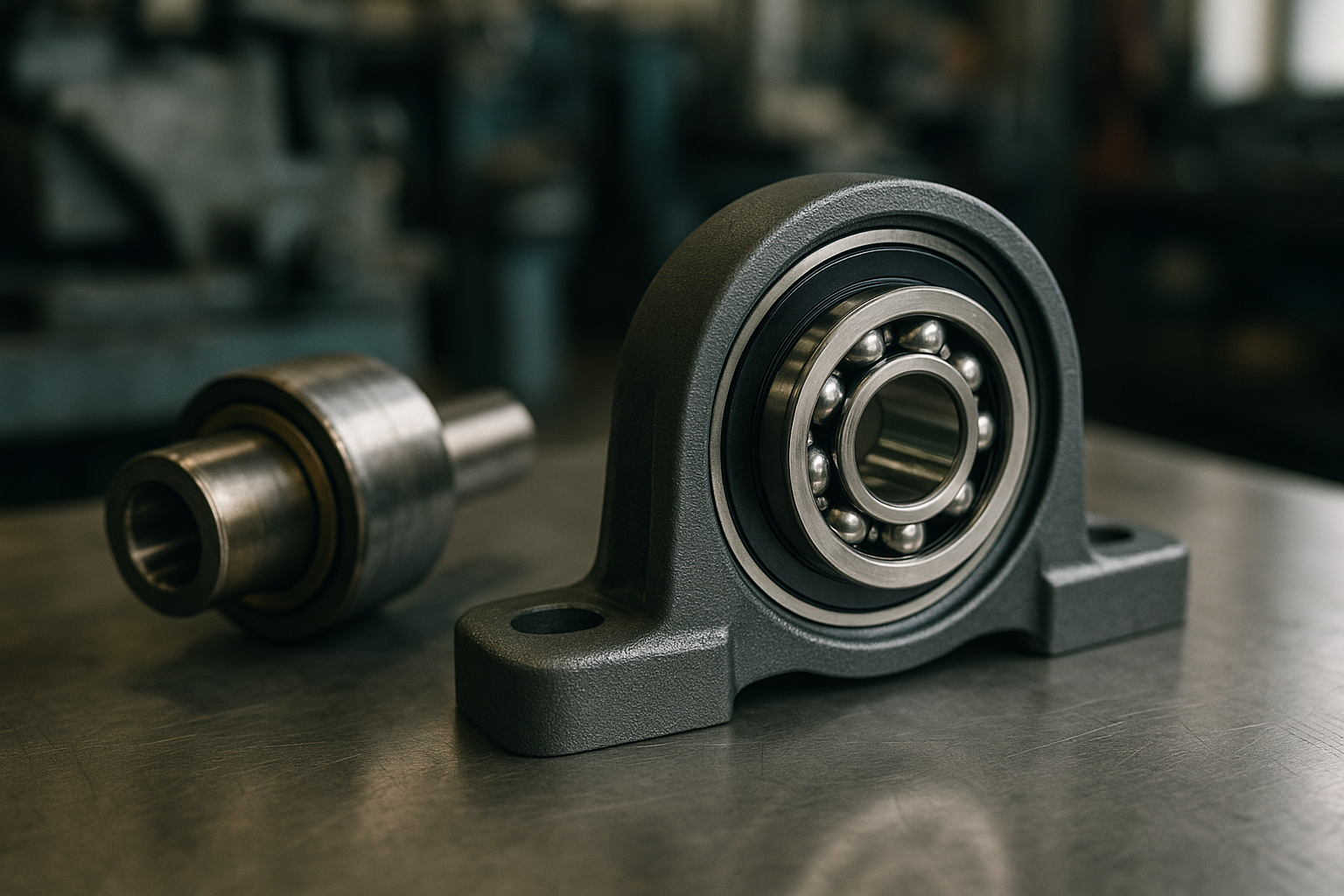
The Italian harvest window runs from late August into October and it does not wait. Wheat, maize and rice each come ready inside a fortnight, the weather cooperates for a few days at a time, and a machine that stops takes the whole operation with it. Combine threshing bearings are the components most likely to cause that stop, because the threshing cylinder works harder than anything else on the machine and does so in conditions that punish any bearing whose seal has started to give.
Why the threshing section is where failures concentrate
The cylinder turns fast under continuously varying load as crop density changes, in an atmosphere of dust, chaff and grain fragments, for ten or twelve hours a day across several consecutive weeks. Concave and beater bearings share the same environment. The loading is neither steady nor predictable, and the contamination is relentless. Bearings that would run for years on an indoor shaft need replacing after a few seasons here, and the ones that fail mid-harvest almost always show contamination ingress rather than fatigue when they are opened.
The walk-round that earns its hour
Before the machine goes out, turn every accessible threshing shaft by hand through full revolutions and pay attention to roughness, catching or unusual resistance. Inspect every seal for splitting, packing or displacement. Look for oil weeping from housings and for corrosion streaking that indicates water has been sitting where it should not. Complete the greasing schedule properly, on every point the manual lists, with the specified product. Done thoroughly this takes an hour or two and catches most of what would otherwise fail in the field. The equivalent check on the chopper — the other high-risk position — is covered in our piece on the straw chopper position.
Know what is actually fitted, not what the manual says
Machines that have been repaired before frequently carry substitutions nobody recorded — a different brand, a different seal execution, occasionally a different clearance. Verify the designations on the machine and write them down, because ordering spares against the manual and discovering the mismatch during harvest is a particular kind of avoidable misery. Housed units and insert bearings dominate these positions, and the aftermarket standards are set out in our note on insert and Y-bearings in agricultural transmissions; the relevant stock sits across the housed unit and deep groove ranges.
Spares in the shed, not at the dealer
Hold the threshing bearings, seals and retaining hardware on the farm before the first day. Everyone in the district needs the same parts in the same fortnight, and even a well-stocked dealer becomes a queue during harvest. The complete kit costs a fraction of one lost day, and the day it saves is one you cannot buy back later — Italian harvest windows do not extend to accommodate a parts delivery.
Catching it early while the machine is working
An infrared thermometer on accessible housings at the end of each day takes five minutes and builds a picture; a bearing running well above its neighbours is telling you something several days before it fails. Operators who know the machine hear and feel the change first, which is why telling them what to listen for is the cheapest monitoring available. Once degradation is evident, plan the replacement within two or three working days. An evening change takes a few hours; a seizure in the field takes days and frequently damages the shaft as well, which turns a bearing job into a fabrication job.
The post-harvest habit that fixes next year
When the season ends, go back through the threshing section and replace everything that survived but shows wear. Winter is when parts are available, the workshop is comfortable and nothing depends on finishing today. Farms that do this consistently stop losing harvest days to bearings; farms that do not spend every August discovering problems under time pressure. It is the same hour of work either way — the only variable is whether you choose when to spend it.
Preparing machines for the harvest window? Our team supports Italian and European agricultural operations with bearing specification and seasonal spare kits. Book a free consultation.