
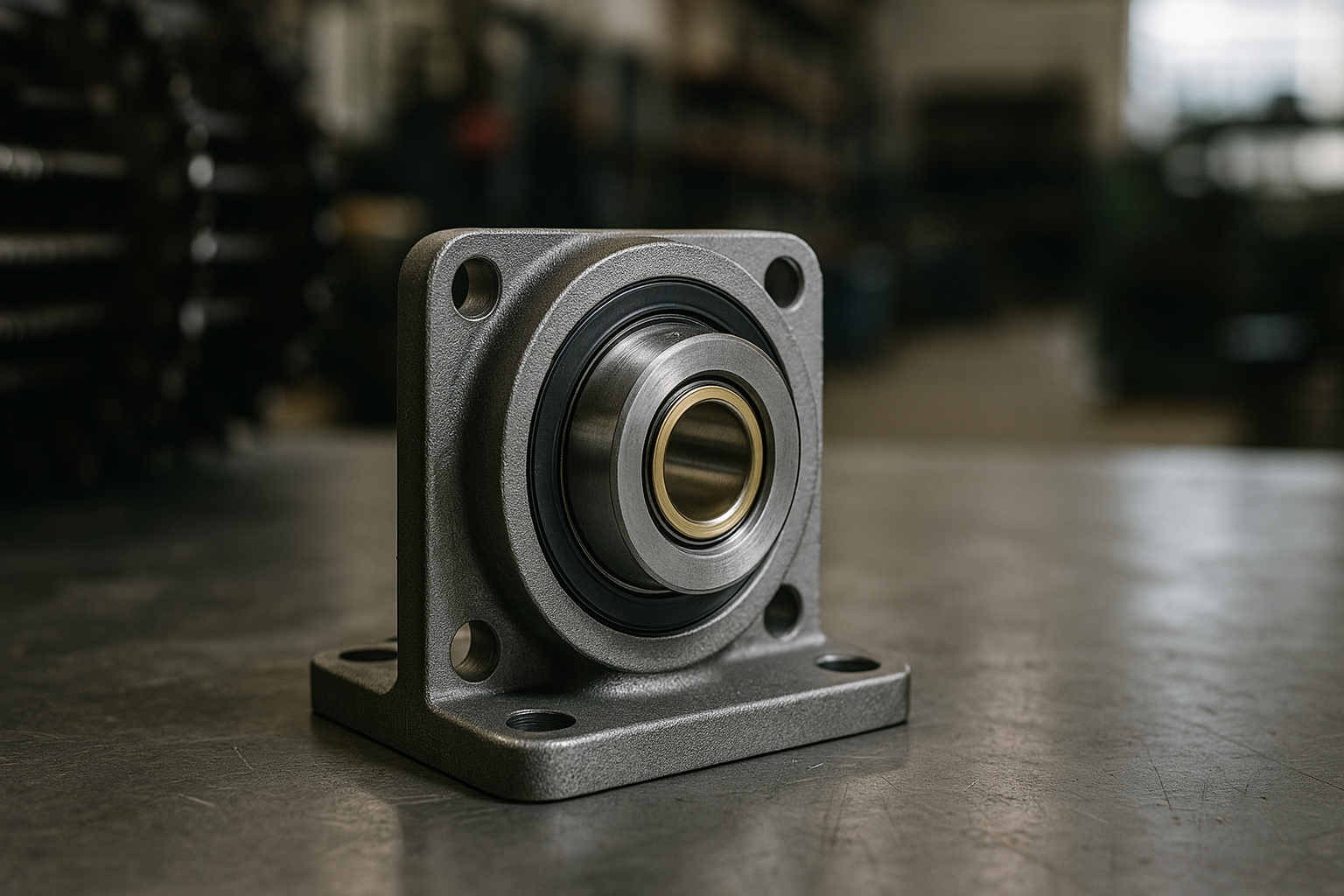
Ask a combine driver which bearing worries them most and the answer comes without hesitation. Straw chopper bearings sit at the back of the machine spinning at three thousand revolutions inside a cloud of chaff, taking impacts from every stone and stalk that comes through, on a machine that runs twelve hours a day for six weeks and then sits in a shed for ten months. It is the hardest position on the combine by a considerable margin, and it fails at the worst possible time because the worst possible time is the only time it runs.
Four stresses that arrive together
High rotational speed generates centrifugal load and heat. Impact loading from crop material and the occasional stone transmits shock through the rollers and the cage. The atmosphere is dense with abrasive dust and fibrous chaff that attacks any seal not designed for it. And the duty is continuous across long days, so nothing gets a chance to cool. Any one of these is manageable; the combination is what makes the position exceptional. A bearing specified for the calculated load and nothing else will not last a season, and the load calculation is the part of the specification that matters least here.
What the position actually needs
A high speed rating with genuine margin above the operating speed rather than at it. Dynamic capacity chosen for shock rather than steady load. Heavy-duty contact seals that handle fibrous contamination, not shields. And a grease specification that stays in place at elevated temperature instead of migrating out under centrifugal force. Premium executions from SKF, FAG and TIMKEN deliver thirty to fifty percent more service life here than standard grades, and this is one of the clearest cases in agriculture where the premium is straightforwardly worth paying — a failure costs a harvest day, and a harvest day costs more than every bearing on the machine.
The pre-season hour that saves the season
Before harvest, turn the chopper by hand and feel for roughness or notchiness. Look at the seals for splitting, packing or displacement. Check for play in the shaft. Confirm the greasing has been done to the manufacturer’s specification with the right product. This takes under an hour and catches the majority of bearings that would otherwise fail mid-harvest, when the same job means a field, a toolbox and a lost day. The rest of the machine deserves the same treatment, and the broader routine is described in our notes on a French farmer’s combine rebuild.
Spares belong on the farm
Hold the chopper bearings, seals and retaining hardware on site before the first day. Dealers are busy during harvest for exactly the same reason you are, and a next-day part is still a lost day. Note the specifications actually fitted rather than what the manual says, because previous repairs introduce substitutions that nobody records and finding out mid-field is the worst moment to discover it. The spare kit costs a fraction of a day’s combining.
Reading the machine while it works
A bearing going bad in the chopper announces itself for days. Temperature is the clearest signal — an infrared reading on the housing at the end of each day takes seconds and builds a trend; something running well above its neighbours needs looking at. Drivers who know the machine hear the change in the chopper note before any instrument reports it, which is why telling them what to listen for is worth more than the thermometer. Once degradation is clear, plan the change within two or three days rather than hoping. A planned evening replacement takes a couple of hours; a seized chopper in the middle of a field takes the rest of the week, and often takes the shaft with it.
The job to do in November
After harvest, go back over the chopper and replace anything that survived but looks tired. Doing it in winter, with parts available and no weather pressure, converts the whole category from an emergency into a scheduled task. This single habit is what separates operators who lose days to chopper bearings from those who do not, and it costs nothing except remembering to do it while the machine is still fresh in mind. The same discipline applied to the threshing mechanism is covered in our piece on pre-harvest checks on threshing bearings, and the relevant sizes sit across the deep groove and housed unit ranges.
Preparing a combine fleet for the season? Our team supports European agricultural operations with bearing specification and spare kits. Book a free consultation.