
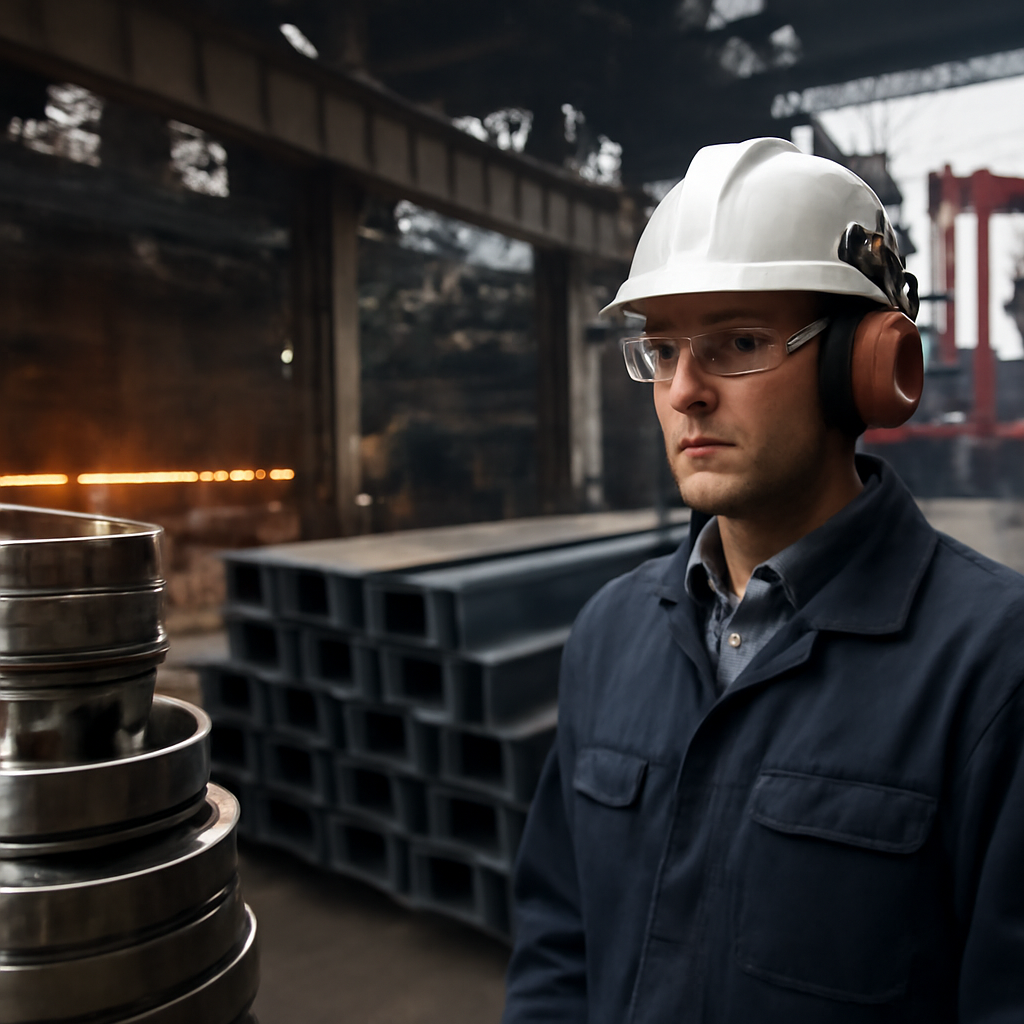
Alongside the EU’s new steel safeguard, CBAM Phase 2 for steel went live on 1 July 2026: this second regulatory shift — Phase 2 of the Carbon Border Adjustment Mechanism (CBAM) — now requires batch-level embedded-carbon reporting for imported steel products — the raw material of virtually every rolling-element bearing sold in Europe. Bearing importers who treated CBAM as a distant compliance concern in 2025 now face immediate documentation obligations and, from January 2027, real financial exposure.
The facts
The CBAM transition period continues to run through 31 December 2026, but from 1 July 2026 the reporting perimeter tightens. Importers of steel products covered by CBAM — including hot-rolled coil, H-beams, angle steel, wire rod and bars used in bearing steel supply — must submit batch-level embedded-carbon data and supplier verification through the CBAM registration system. The definitive regime starts on 1 January 2027, when EU importers will begin buying CBAM certificates matching the carbon intensity of their imported steel volumes, priced at the weekly EU ETS average. According to S&P Global, the EU steel sector’s 2026 reckoning combines CBAM with the new safeguard regulation on the same product scope — meaning identical CN codes trigger both regimes simultaneously. Fastmarkets estimates the combined impact adds up to €50/tonne to landed steel costs by mid-2027 for high-carbon origins.
Market implication
For bearing distributors and industrial buyers, CBAM Phase 2 changes the shape of supplier scorecards. Traditional vendor selection on price, delivery and quality now needs a fourth axis: emissions transparency. Chinese, Indian and Turkish mills — historically competitive on steel input pricing for bearing rings and cages — face structurally higher CBAM exposure because their coal-heavy blast-furnace routes carry roughly 2× the CO₂ intensity of EU electric-arc-furnace steel. That gap translates directly into certificate costs once the definitive regime activates. Buyers that lock supply agreements now without emissions verification clauses risk being unable to pass through duty costs to end customers. On the upside, EU-integrated mills (ArcelorMittal, Salzgitter, SSAB) and Turkish EAF producers gain a durable competitive edge that will reshape the bearing steel supply base. Expect Big Four bearing manufacturers to publish scope-3 emissions data on standard product families within the next two quarters — buyers should ask for it in current tenders.
Procurement box: what buyers should do
- Get an EORI-linked CBAM account: if your company imports steel-based bearing components into the EU and has not yet registered on the CBAM portal, do it this month. Reporting deadlines for Q3 2026 fall on 31 October.
- Demand batch-level CO₂ certificates: update your supplier RFP template to require batch-level embedded-emissions data per shipment. Refuse quotes that only offer plant averages.
- Model the 2027 certificate cost: at current ETS prices (~€75/t CO₂), high-CO₂ steel could carry €130–180/t in CBAM certificates. Add this row to your landed-cost sheet now.
- Reserve EAF-origin capacity: where technically feasible, negotiate framework agreements with electric-arc-furnace steel suppliers for 2027 volume — that supply base has structurally lower CBAM exposure.
- Update contract clauses: add explicit “CBAM certificate cost pass-through” language to every long-term supply contract signed from July 2026 onwards.
Looking ahead
Watch two milestones. First, the October 2026 CBAM data quality review: the Commission will publish aggregate emissions-intensity benchmarks by product and country of origin, which will become the default value for importers who cannot provide verified supplier data — historically a punitive assumption. Second, the January 2027 hard cut-off, when certificates start being purchased and surrendered. Bearing buyers who spend Q3 and Q4 building supplier emissions dossiers will absorb the transition; those who wait for the deadline will face both compliance risk and the tightest EAF-steel capacity in a decade.
Source
Europe’s steel industry faces its 2026 reckoning with CBAM — S&P Global, 1 July 2026
Related on Eurobearing
- US steel tariffs and their impact on European bearing prices
- Why bearing prices are still rising in 2026
- Bearing market H2 2026: three scenarios for distributors
- European distributors stockpiling bearings for Q3 2026
- Contact our technical team
Need help with bearing selection? Contact our technical team for a free consultation.