
A purchasing manager comparing this September’s quotations against January’s will already have noticed it, and the raw material line explains most of the gap. European steel prices have run up through almost the whole of 2026, with published Northern European hot rolled coil indices standing around 711 euros per tonne at the end of July after a gain of roughly 28 euros across that month alone, and market reporting through August put the cumulative rise at something close to fifteen percent since the start of the year. Prices were still climbing into the first days of September on expectations of reduced availability, with maintenance work at Europe’s largest blast furnace cited as the immediate trigger. For anyone buying bearings, chain, belts or seals, the relevant question is not the coil price itself but how and when that cost reaches a finished component, and the answer is less direct than the headline suggests.
What has actually moved, and what is driving it
Three forces have been pushing in the same direction for most of the year. Supply has been constrained by planned and unplanned outages at major European mills, compounded by low water on the Rhine restricting raw material movement and forcing throttled hot metal output. Order books have been full enough that mills have been able to hold price, with reports through the summer of August sold out and September substantially committed. And the policy layer has added a floor: the European Commission’s consultation on extending the product scope of the steel safeguard regulation has signalled continued protection of the domestic market, while the carbon border adjustment mechanism has raised the landed cost of imported material from higher-emission producers. None of these is a short-term spike driver that unwinds in a month. The implication is a market that is tight for structural reasons rather than speculative ones, which historically produces a slower and flatter descent than a demand-driven rally. We looked at the regulatory half of this in detail when CBAM phase 2 came into force in July.
Why component pricing lags coil by two quarters
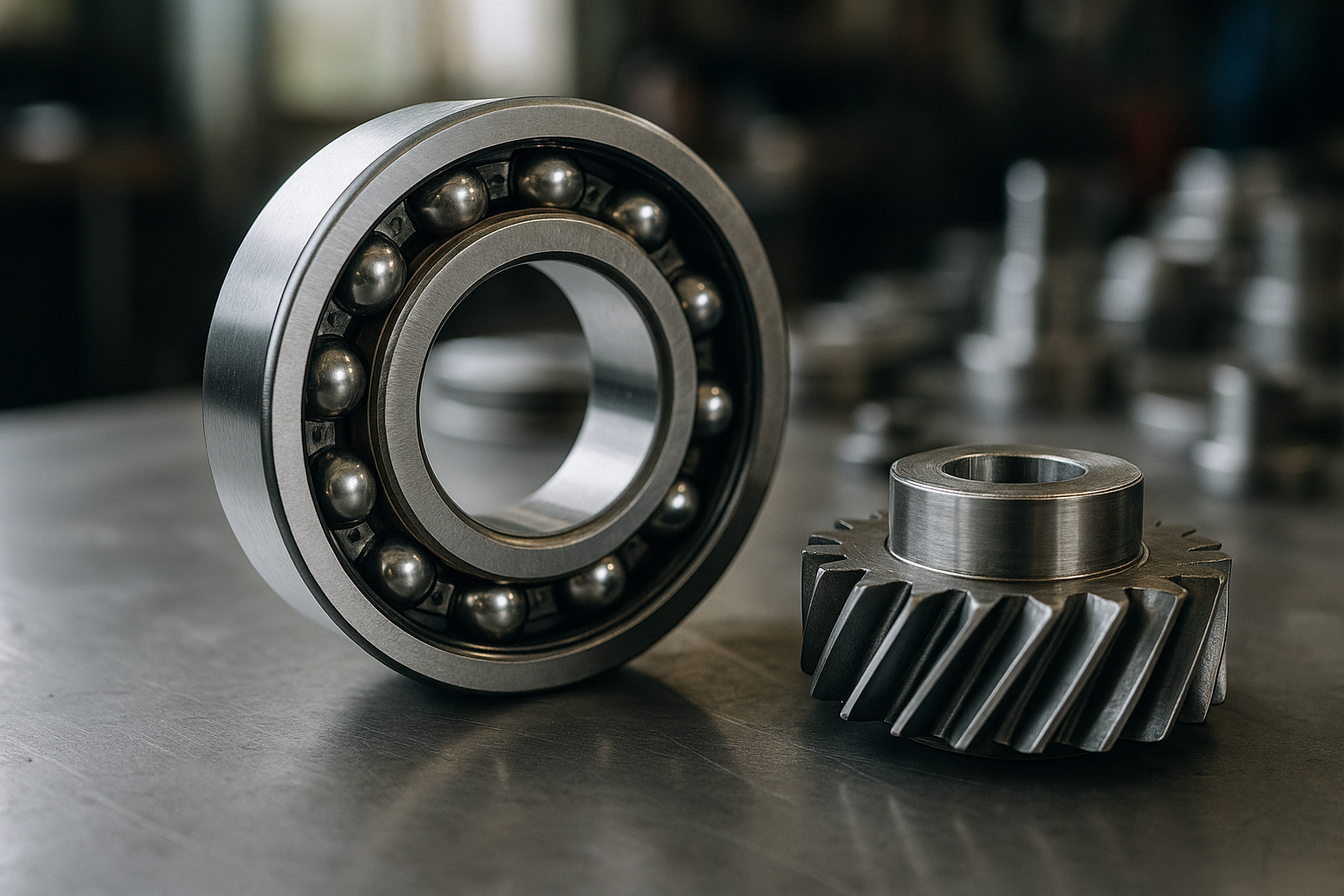
Hot rolled coil is not what a bearing is made from. Bearing rings start as hot rolled bar or tube in through-hardening or case-hardening grades, which are priced separately and move with a lag and a damping factor relative to flat products, and steel accounts for well under half the delivered cost of a finished bearing once forging, turning, heat treatment, grinding, assembly, packaging and distribution are counted. The consequence is that a fifteen percent move in coil does not become a fifteen percent move in your invoice. What it does is exhaust the manufacturers’ ability to absorb cost, which typically shows up as the withdrawal of discount structures and shorter price validity on quotations before it shows up as a list price increase. Chain and sprocket products react faster because steel is a larger share of their cost base, while rubber-based products such as classic V-belts are driven by entirely different inputs and may not move at all. Expect the effect to be visible in first-quarter price lists rather than in fourth-quarter ones.
What a buyer can usefully do between now and January
The unhelpful response is to buy forward across the whole range, which ties up working capital in a soft demand environment where the machinery cycle is still weak. The more defensible response is selective. Lock pricing where you have annual contract mechanisms and the counterparty is willing, since suppliers in a rising input market often prefer volume certainty to holding out for a higher number. Bring forward replenishment on steel-intensive fast movers where the storage risk is low and turnover is high: taper roller bearings in the common automotive and industrial sizes, sprockets, and heavy spherical references such as the 22213-K-M-C3 class. Do not forward-buy sealed units and belts, because their shelf life clock runs regardless of price. And take the opportunity to check quotation validity periods on open offers, because the quiet shortening of validity from ninety days to thirty is usually the first visible sign that a supplier is preparing to move list price.
Set against the demand picture, this is an awkward combination for the middle of the chain: input costs rising into a machinery market that the VDMA has just marked down for a fourth consecutive year, as covered in our note on the forecast cut. Margin compression falls hardest on distributors who compete on price alone, because they have the least room to pass anything through. The ones who come out of it intact tend to be those who can hold availability on the references customers need urgently, since an urgent order is priced on lead time rather than on a comparison sheet. That argues for using the fourth quarter to get depth right on the fast-moving range rather than for a general stock build, and for having the raw material conversation with customers now rather than in February when the new price lists arrive without warning.
Need pricing certainty into Q1? Our team supports European distributors and OEMs with stock availability, contract pricing and sourcing on steel-intensive references before the new lists land. Book a free consultation.