
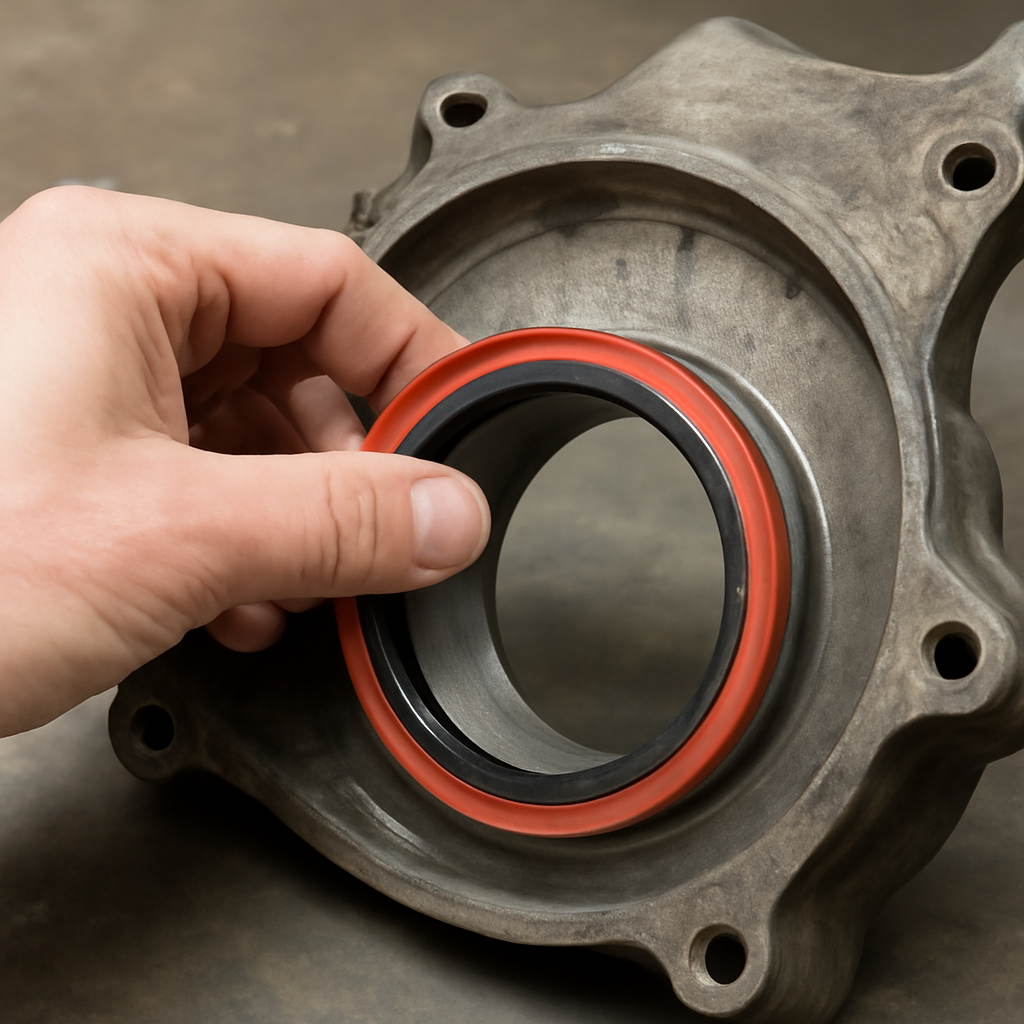
Any seasoned rebuild technician has walked up to a housing bore that is not quite round anymore, staring at a fresh CORTECO shaft seal and wondering whether to press it home and hope for the best. Warped housing bores are common on older gearboxes and pump bodies that have been rebuilt three or four times over the equipment life. Getting the new seal to sit square in a bore that is not perfectly cylindrical requires technique. This piece walks through the workshop recovery method that actually works, without machining the housing bore back to specification.
Why housing bores go out of round in the first place
Three common mechanisms produce out-of-round housing bores over equipment life. First: seal replacement damage — installers using screwdrivers or drift pins to pry old seals out leave witness marks that gradually deform the bore edge. Second: heat cycling stress — cast iron housings expand and contract with operating temperature over years. Third: mounting stress — pumps and gearboxes bolted to inadequately flat mounting surfaces develop bore distortion.
Assessing whether recovery is possible
Before deciding to install a seal in a distorted bore, measure the distortion. A dial indicator on a magnetic base rotating around the bore inner surface gives a quick read. If the total indicated runout stays below 30 microns, the recovery method works. If runout exceeds 50 microns, the housing bore needs actual machining or a bore sleeve insert. Between 30 and 50 microns the answer depends on the seal design.
The recovery method: sacrificial installation ring
The workshop recovery method that has proven most reliable is the sacrificial installation ring. A soft aluminium or nylon ring machined to the outer diameter of the seal and press-fit onto the seal outer edge before installation. When you press the assembly into the bore, the ring absorbs the distortion — deforming slightly around the low points — and holds the actual seal true. The result is a seal that runs square against the shaft even in a bore that is not perfectly round.
Preparing the housing bore properly
Before installing anything, clean the bore thoroughly. Any grease residue or metal chip debris pushes the seal off-square during installation. Use a lint-free cloth with light oil. Inspect visually for burrs on the bore edge and de-burr with a fine file if present. A rotary shaft seal installed against a burred bore edge will develop leaks within a few hundred hours regardless of what you do about the distortion.
The right adhesive for the seal outer edge
Some workshops seat seals dry in tight housings. This works for perfectly round bores but not for distorted ones. On the recovery installation, apply a thin bead of anaerobic adhesive to the outer edge of the seal before installation. The adhesive fills the small gaps where the seal outer edge does not quite make contact with the distorted bore. It sets in 24 to 72 hours and provides both sealing and mechanical retention.
Installation technique that keeps the seal square
Use a proper seal driver that matches the seal outer diameter. Do not use a drift pin, a socket, or improvise from what is on the bench. The driver distributes the installation force evenly around the seal outer edge and prevents the seal from cocking during entry. Press slowly — do not hammer. Watch the seal remain visually square as it enters the bore. If it starts to tilt, back off and re-align.
Checking the installation before restart
After installation, verify the seal seated correctly. Rotate the shaft by hand — the shaft should turn without binding or unusual resistance. Check the seal lip contact with the shaft using a feeler gauge if accessible. Fill the housing to normal service oil level and check for immediate leaks before applying operating pressure or heat. This 15-minute check catches roughly 80 percent of installations that would fail within the first week of service.
When to give up and machine the bore
The recovery method has limits. If the housing bore is out of round by more than 50 microns, no seal installation technique will produce a reliable seal over service life. At this point the pragmatic decisions are: bore the housing to accept an oversize seal, install a bore sleeve insert, or replace the housing entirely.
What buyers should know before ordering the seal
Before ordering the replacement CORTECO seal, measure the housing bore for distortion. If distortion exceeds 30 microns, order the recovery kit along with the seal. If distortion exceeds 50 microns, order the bore sleeve insert instead. Do not order the seal alone and hope the installation will work — the return trips for repeated failed installations cost more than the diagnostic time up front.
Related coverage on Eurobearing
- Sealing Rings and Oil Seals: Materials Used in 2026
- Bearing Installation: 7 Mistakes Most Technicians Make
- Bearing Removal Without Damage: Tools You Actually Need
- How to Inspect Bearings After Long Inactivity
- Bearing Failure Modes: A Visual Identification Guide
Need help recovering distorted housing bores? Our technical team supports European rebuild shops with seal installation kits. Book a free consultation.