
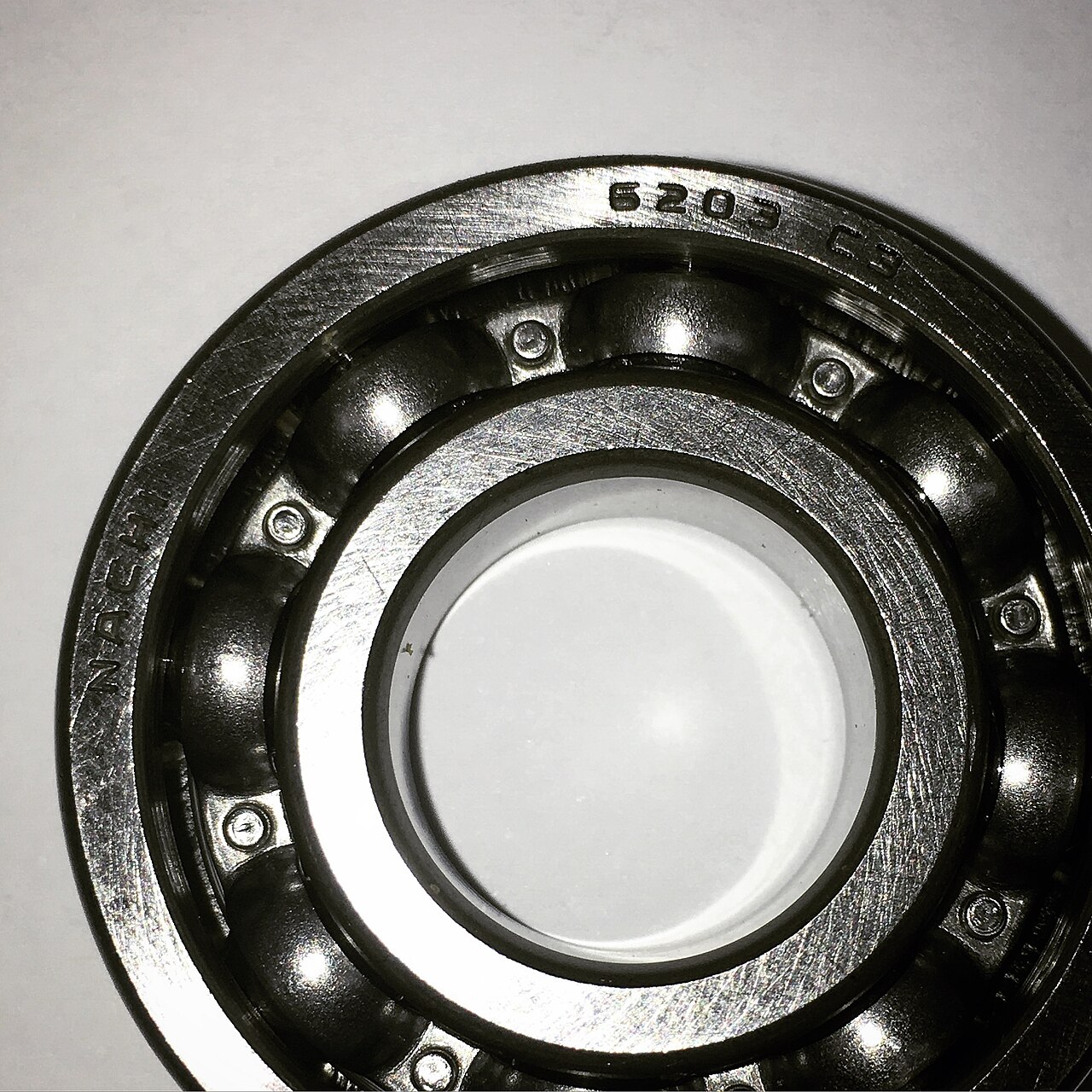
The motor had been rewound and the bearings replaced, yet within forty minutes of restart the drive-end housing was too hot to keep a hand on, and on the bench the old bearing read 6309-2Z/C3 while the new one read simply 6309-2Z, which is the shortest possible lesson in why the bearing internal clearance class matters. Nothing else had changed. The shaft fit, the housing and the grease were exactly as before, yet the normal-clearance bearing had too little room left once the interference fit and the temperature gradient had taken their share, and it ran preloaded until it overheated. Clearance is one of the few bearing specifications a buyer can lose by accident at the ordering stage, because the base number fits the shaft and housing perfectly whichever group is chosen. Choosing between CN, C3 and C4 is therefore not a matter of preference but of arithmetic: how much clearance the bearing has on the shelf, how much mounting and operation will take away, and how much should remain while it runs.
What the ISO 5753-1 groups actually define
Radial internal clearance is the total distance one ring can move radially relative to the other, unmounted and under negligible load. ISO 5753-1 groups it into classes, in increasing order C2, CN, C3, C4 and C5, with CN, the normal group, usually left off the marking. The values are not single numbers but ranges that grow with bore diameter, and adjacent groups overlap. For a deep groove ball bearing in the 24 to 30 mm bore range, such as a 6205, the normal group runs from about 5 to 20 micrometres, C3 from about 13 to 28 and C4 from about 23 to 41. Spherical and cylindrical roller bearings have their own, larger tables, and tapered bore spherical bearings have separate values again because mounting deliberately reduces clearance. The overlap matters: a C3 bearing at the bottom of its range and a CN bearing at the top are nearly identical, so clearance should be chosen for the expected reduction rather than a nominal figure. The basics of ball bearing clearance are covered separately; here the focus is selection.
How interference fits consume clearance
Clearance on the shelf is not clearance in service. When the inner ring is pressed onto a shaft with an interference fit it expands, and a large part of that interference, commonly estimated at around 70 to 90 per cent for a solid steel shaft, appears as a reduction in raceway clearance. A tight outer ring fit in the housing does the same from the other side. Consider a 6205 on a k5 shaft seat. The k5 tolerance on a 25 mm shaft is about +2 to +11 micrometres and the bearing bore tolerance is 0 to −10 micrometres, so the interference can range from roughly 2 to 21 micrometres. Taking a typical value of 10 micrometres and an 80 per cent transfer, the fit alone removes about 8 micrometres. Against a CN range of 5 to 20 micrometres, the low end of the population is already close to zero before the machine has turned. The link between a rotating inner ring load and the choice of k5, m6 and H7 fits is therefore half of the clearance decision.
Temperature gradients: the second reduction
The second reduction comes from the temperature difference between the rings. In most machines the inner ring runs warmer than the outer ring, because heat generated in the bearing and conducted along the shaft escapes less easily than heat leaving through the housing. Bearing steel expands by roughly 12 micrometres per metre per kelvin, so a 10 kelvin difference across a bearing whose raceways sit at around 35 to 40 mm diameter removes about 4 to 5 micrometres of clearance. That sounds small until it is stacked on top of the fit reduction calculated above. In electric motors the rotor is a heat source in its own right, and drive-end inner rings often run noticeably warmer than the end shield. In dryer rolls, calender rolls and fans handling hot gas the gradient can be far larger, sometimes several tens of kelvin, with heat entering through the shaft itself. Those are the cases where C4, and occasionally C5, earn their place, usually combined with a floating bearing arrangement that lets the shaft grow axially without loading the bearings.
Why electric motors usually specify C3
Put the two effects together and the industry habit becomes clear. A typical small or medium electric motor runs with an interference fit on the shaft, a moderately warm rotor and relatively light, mostly radial loads at 1,500 or 3,000 rpm. With CN clearance the worst combination of tight fit and thermal gradient can leave the bearing slightly preloaded; with C3 there is margin to absorb both and still finish with a small positive operating clearance. That is why deep groove ball bearings such as the SKF 6205-2Z/C3 are the default in motor end shields across Europe, and why replacing one with a CN bearing is a classic cause of a hot drive end. Smaller motors, especially those with a wave spring preloading the non-drive-end bearing, are sometimes specified with CN deliberately to keep running noise low. Motors running hot or at high speed in compact frames may move to C4, as with a 6204/C4 in some designs. The rule is to follow the motor manufacturer’s original specification rather than assume.
Spherical roller bearings on tapered seats and vibrating screens
Tapered bore spherical roller bearings add a deliberate clearance reduction to the picture. A bearing such as the FAG 22216-K-M-C3, with a 1:12 tapered bore and a machined brass cage, is driven up its adapter sleeve or tapered journal until the radial clearance has fallen by a specified amount, which is how the interference fit is created. The starting clearance must be large enough that a safe residual clearance remains afterwards, so C3 is a common choice in fans, conveyors and paper machinery. Vibrating screens are the hardest case: the unbalance rotates with the shaft, putting a rotating load on the outer ring that demands a tight housing fit, while high accelerations generate heat. Most users therefore move to C4, and dedicated screen designs from FAG, the T41A variants, combine C4 clearance with restricted tolerances. On cylindrical bore shafts that run hot, a 22216-C4 is a frequent upgrade when C3 parts have shown distress. Across the spherical roller bearing range, checking residual clearance with feeler gauges after mounting remains the only reliable confirmation.
Too tight or too loose: what each failure looks like
Both errors have recognisable signatures. Too little clearance, whether chosen wrongly or consumed by fits and heat, produces preload: the rolling elements are squeezed between the rings all the way round, friction rises, temperature rises, and the rising temperature reduces clearance further. This feedback loop can run away within hours, ending in discoloured raceways, degraded grease and, in extreme cases, seizure. Even when it stabilises, a heavily preloaded ball bearing has a much shorter fatigue life. Too much clearance fails more slowly and more quietly. The load zone narrows, so fewer rolling elements carry the load and contact stresses rise, and at light loads the rolling elements can skid as they enter the load zone, leaving smearing marks. The shaft also runs less accurately, raising vibration and noise. Fatigue theory shows that the longest life for a ball bearing occurs at a very slightly negative operating clearance, but the curve falls steeply on the preloaded side, so practical selection aims for a small positive value with a margin against overheating.
Reading the clearance marking on the box and the ring
Because clearance does not change the dimensions, it has to be read from the marking, and each brand writes it slightly differently. SKF uses a slash, as in 6205-2Z/C3, and combines tolerance and clearance into codes such as /P63 for class 6 tolerances with C3 clearance. FAG writes it after a hyphen or a dot, as in 6205-2ZR-C3, while NSK and Koyo append it directly, as in 6205ZZC3. Normal clearance is usually not marked at all, so a missing suffix means CN, not unknown. On the parts counter the risk lies in descriptions that drop the suffix: a pick list reading 6205-2Z, an e-procurement catalogue truncated to the base number, or a box label that has been torn. Some plants tag C3 stock separately for exactly this reason. When an old bearing is too damaged to read, the equipment manual or the replacement history is a better guide than guessing, and for a standard electric motor with an interference-fitted shaft, C3 is the safer default when no other information exists.
Choosing a clearance class is a short calculation dressed up as a buying decision. Start from the unmounted range in ISO 5753-1, subtract the reduction caused by the interference fit on the rotating ring, subtract the thermal reduction from the expected temperature difference between inner and outer ring, and check that a small positive operating clearance remains across the realistic spread of tolerances. For most electric motors and general-purpose shafts with a tight inner ring fit, that leads to C3. For tapered bore spherical bearings it leads to C3 as a minimum and C4 where heat or vibration dominate. CN remains correct where fits are light, temperatures are low, and running accuracy or noise matters most. The one choice that is never correct is the accidental one, made because a suffix disappeared somewhere between the old bearing and the purchase order. Writing the clearance group on every request is the cheapest reliability improvement available to a maintenance department.
Not sure which clearance class your motor, fan or screen needs? Our team supports maintenance engineers in matching CN, C3 and C4 bearings to the real fits and operating temperatures of each machine. Book a free consultation.
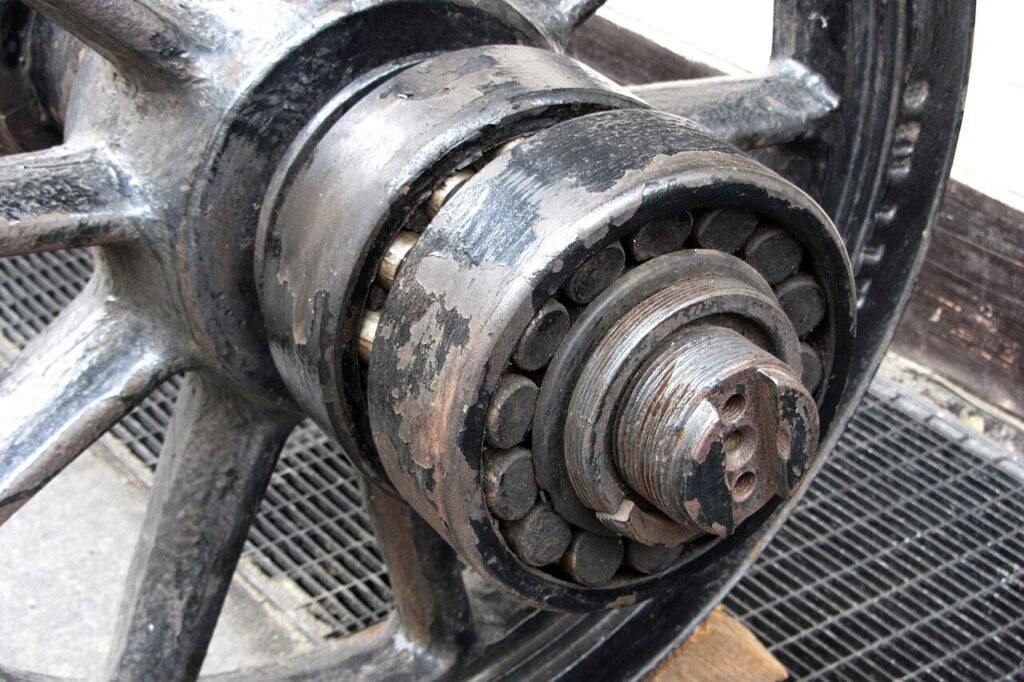
Image credits: “Kugellager 6203 C3” by SimonWaldherr (CC BY-SA 4.0); “C00 328 Doppelpendelrollenlager” by Falk2 (CC BY-SA 4.0), via Wikimedia Commons.