
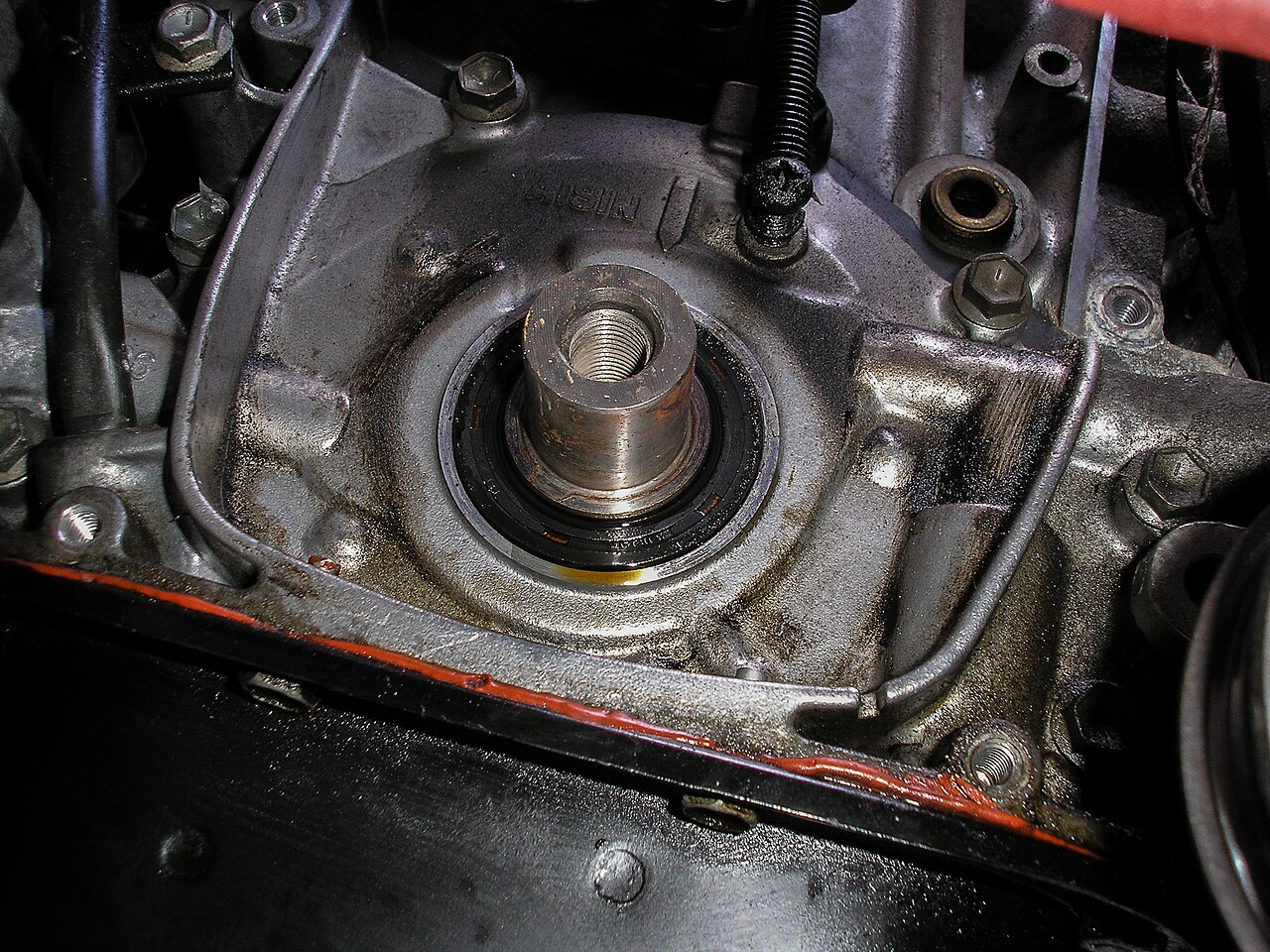
A gearbox comes back from overhaul, the new seal goes in with a few taps of a drift, and within a week there is a thin film of oil creeping down the housing face. The lip is fine and the shaft is polished, yet the leak is real, because it is coming from the outside diameter of the seal, not the lip. That is the moment when the choice between a rubber-covered and a metal-cased DIN 3760 rotary shaft seal stops being a catalogue detail. The standard defines three basic outer constructions, Type A, Type B and Type C, each with a dust-lip variant marked AS, BS and CS, and the right one depends far more on the housing bore than on the shaft. Choosing it well means looking at the bore material, its finish and tolerance, how the seal will be installed, and how the housing behaves when it warms up. Get those four points right and the lip has a fair chance of reaching its design life.
What Type A, B and C actually describe
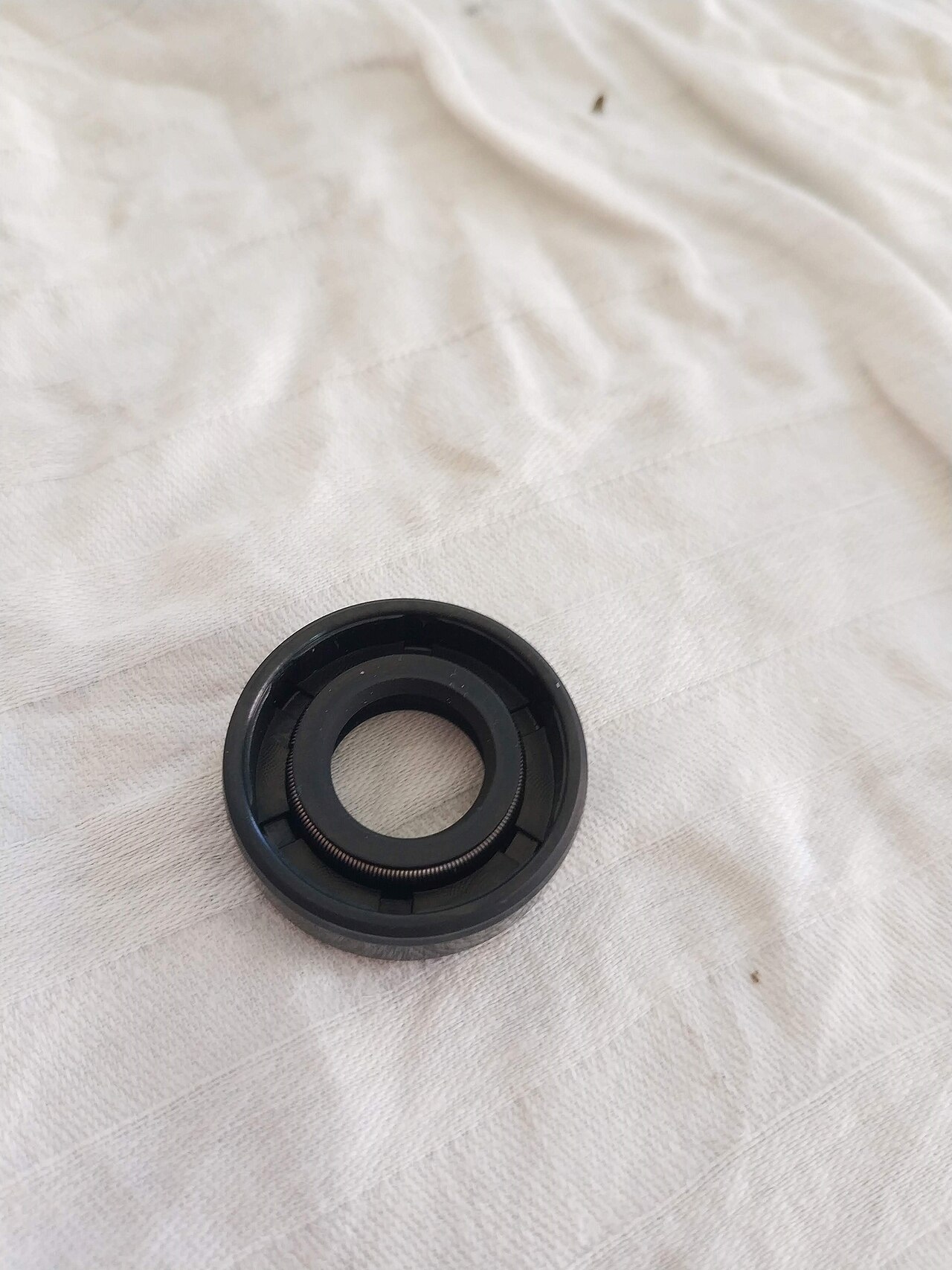
The three letters in DIN 3760, mirrored internationally by ISO 6194, describe how the outside diameter of the seal is built, because that surface is responsible for the static seal and the retention in the housing. Type A has an elastomer-covered outside diameter: the metal stiffening insert is fully embedded in rubber, so the bore sees only elastomer. Type B has a bare metal outside diameter with the rubber lip moulded to the inner part of the case. Type C adds a second metal cap inside the case, giving a double-case construction that is much stiffer and better suited to larger diameters and rough handling. The suffix S, as in AS, BS or CS, adds a secondary dust lip facing outward. Most manufacturers use their own codes for the same shapes, which is why our guide to decoding CORTECO oil seal codes is useful when a worn seal arrives at the counter with only a brand designation still readable.
Why the housing bore decides the outer construction
The outer diameter of a radial shaft seal has two jobs: it must stop fluid leaking around the outside and it must stay put under pressure pulses, vibration and temperature cycles. A rubber-covered Type A seal does both through elastomer compression, so it forgives a bore with slightly coarse finish, small scratches or mild ovality, and it seals well in light alloy housings where thermal expansion opens the bore more than the shaft. A metal-cased Type B needs a cleaner bore, typically machined to H8 with a finish in the range that allows metal-to-metal press fit without micro-leak paths, but in return it centres more accurately, presses in with less force and resists turning in the bore. In practice that means rubber-covered seals for aluminium gearbox covers, pump bodies and reworked housings, and metal-cased seals for precise steel or cast-iron bores where concentricity and easy installation matter more than forgiveness.
Rubber-covered Type A in daily maintenance
For a maintenance team that rebuilds a wide mix of machines, the rubber-covered seal is usually the safer default, and the ranges of NBR rotary shaft seals reflect that: most catalogue sizes exist first as Type A or AS. The elastomer outside diameter has a higher interference than a metal case, typically a few tenths of a millimetre on medium diameters, which compensates for bores that have been opened slightly by previous seal changes. It also tolerates small burrs that would score a metal case and leave a leak path. The trade-offs are higher press-in force, the risk of the seal springing back or cocking if it is not pushed in squarely with a flat tool, and slightly less precise centring on large diameters. In split housings, where the joint line crosses the bore, Type A is almost always the better choice, because the rubber bridges the small step at the parting line that a metal case would turn into a leak.
Metal-cased Type B and the double-case Type C
Metal-cased seals earn their place where installation is repeated many times and bores are made accurately, typically in OEM assembly of electric motors, gear units and pumps. Our range of metal rotary shaft seals is used heavily in those applications because a Type B slides in with predictable force, sits square, and holds its position under axial pressure without creeping. The weakness is the outside diameter itself: on a bore with a coarse finish, light porosity in a casting or thermal growth in an aluminium housing, metal against metal can weep. Many fitters add a thin film of non-hardening sealant on the outside diameter in those cases, provided it never reaches the lip. Type C, with its additional inner cap, is the heavy-duty version for diameters above roughly 100 mm, for seals that will be handled roughly on site, and for applications where a flimsy case could deform during installation and distort the lip contact.
When the dust lip in AS, BS and CS is worth it
The secondary dust lip does not seal oil; it keeps dirt, water splash and fine dust away from the primary lip, which is far more sensitive to abrasive particles than to the oil it retains. In agricultural gearboxes, conveyor drives, mixers and any outdoor equipment the S variant normally pays for itself, especially when the space between the two lips is filled with grease during assembly so that the dust lip runs lubricated. In clean indoor machinery the extra lip adds friction and heat without much benefit, and at high peripheral speeds it can run dry and harden. The decision is similar to the one we discussed for gearbox output shaft seals with single lips, double lips or PTFE: start from the contamination on the outside, not from habit. Where the external environment is truly harsh, a dust lip alone is rarely enough and an additional V-ring or labyrinth should be considered.
Fitting rules that protect the outside diameter
Whatever the outer construction, most outside-diameter leaks are created during installation. The housing bore needs an entry chamfer, typically 15 to 30 degrees, deburred and free of sharp edges that can peel rubber or score a metal case. The seal should be pressed in with a flat tool that bears on the outer rim, never with a drift on the lip area, and it must end square to the shaft, because a cocked seal both leaks at the outside diameter and wears its lip unevenly. On the shaft side, the usual requirements still apply: hardness above about 45 HRC, a plunge-ground finish without spiral lead, and a chamfer or a fitting sleeve so the lip is not cut on keyways or threads. When the housing itself is damaged, the recovery techniques in our article on fitting a CORTECO shaft seal in a warped housing show how far a rubber-covered seal can rescue a bore before machining becomes unavoidable.
Sourcing equivalents across CORTECO and Dichtomatik
Because the outer construction is standardised but the designations are not, cross-referencing is where many orders go wrong. A CORTECO seal and a Dichtomatik seal with the same shaft diameter, bore diameter and width can still differ in outer construction, lip material and spring design, so the type letter must be checked explicitly rather than assumed from the size. A reliable order specifies four elements: the three dimensions, the outer construction (A, B or C), the presence of a dust lip, and the elastomer, usually NBR for mineral oils up to around 100 °C or FKM for higher temperatures and aggressive fluids. Our comparison of Dichtomatik rotary shaft seals against CORTECO on the shelf shows how close the two ranges are once those four elements are aligned, and where substitution needs a second look.
The short version is simple enough to pin above the seal drawers. Look at the bore before you look at the seal: aluminium, split, worn or slightly rough means a rubber-covered Type A or AS; a precise steel or cast-iron bore with repeated assembly means a metal-cased Type B or BS; large diameters, heavy handling or very stiff requirements mean Type C. Add the dust lip only when dirt or water actually reaches the seal, fill it with grease when you do, and install every seal square with a proper tool. Most of the leaks that get blamed on the lip are really outside-diameter problems, and a few minutes spent matching the outer construction to the housing will save a second teardown, a second seal and a second afternoon of oil on the floor.
Not sure which DIN 3760 type your housing needs? Send us the bore dimensions, housing material and the code from the old seal, and our team will match the right CORTECO or Dichtomatik equivalent. Book a free consultation.
Image credits: “Wellendichtring Suzuki G10A” by Thilo Parg (CC BY-SA 3.0); “Gufero s prachovkou (003)” by Juandev (CC BY-SA 3.0), via Wikimedia Commons.