
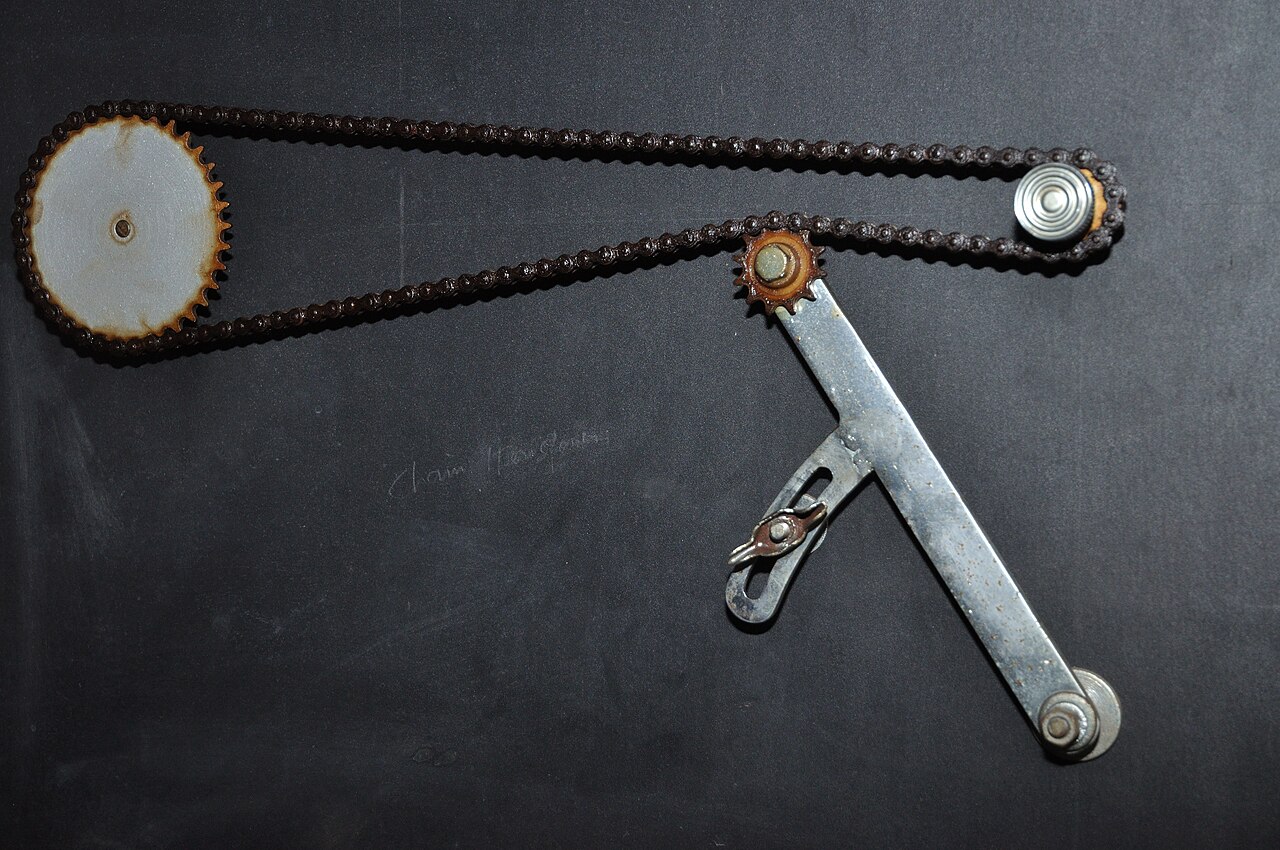
On a bottling line conveyor the drive chain has started to climb the teeth of the small sprocket every few hours, throwing the line into a fault and sending an operator to restart it by hand. The chain looks clean, the tension seems normal and the sprockets were replaced only a year ago. A quick measurement over twenty pitches tells the real story: the chain has stretched by more than three per cent, the rollers no longer sit at the bottom of the tooth gaps and every revolution pushes them a little higher. Roller chain selection is usually treated as a matter of choosing a pitch that fits the sprockets, yet most chain drive problems in plants trace back to decisions about strand count, sprocket size, lubrication and replacement limits. This guide follows those decisions in order, from the chain standard and pitch through to the elongation figure at which a chain should be taken off, so that the drive works reliably rather than merely fitting the space.
ISO 606 and the two chain families
Industrial roller chains in Europe are standardised under ISO 606, which covers two families that look similar but do not interchange. The European B series, derived from British standards, uses designations such as 08B-1, where 08 indicates the pitch in sixteenths of an inch, so 08B has a pitch of 12.7 mm, B identifies the series and the final digit the number of strands. The American A series, derived from ANSI, uses the same pitches but different roller diameters, plate thicknesses and inner widths, so an 08A chain will not run correctly on an 08B sprocket even though the pitch is identical. Most European machinery uses the B series, while equipment of American or Asian origin often uses the A series, and mixing them is one of the commonest causes of early wear on rebuilt drives. Checking the roller diameter and inner width with callipers before ordering removes any doubt, and our roller chain range lists both dimensions for every designation alongside the breaking load.
Choosing the pitch from power and speed
Pitch selection starts from the power to be transmitted and the speed of the small sprocket, corrected by a service factor for the type of load and driver. A smooth electric motor driving a uniformly loaded conveyor may need a factor close to 1.0, while a reciprocating compressor or a crusher driven by an internal combustion engine can require 1.5 or more. The corrected power is then compared with the manufacturer’s power rating chart, which shows for each pitch the power capacity as a function of small sprocket speed. As a rule, a smaller pitch runs more smoothly and quietly at high speed, while a larger pitch transmits more power at low speed. When the chart points to a large pitch at a relatively high speed, a smaller pitch in duplex or triplex form is often the better solution, because it keeps the impact energy of each roller entering the sprocket low. Our article on SEDIS roller chain pitch and attachments shows how a full pitch range is organised in practice.
Simplex, duplex or triplex strands
A multi-strand chain is not simply two or three chains side by side, because load sharing between strands is never perfect. Manufacturers therefore apply strand factors: a duplex chain carries roughly 1.7 times the power of the equivalent simplex chain and a triplex roughly 2.5 times, not two or three times. Moving from simplex to duplex is attractive when the space for sprocket diameter is limited or when a smaller pitch is preferred for smoothness, and it keeps the same pitch line on the sprockets, which simplifies the layout. The cost is greater sensitivity to misalignment, since a twisted shaft or offset sprocket loads one strand more heavily than the others, and wider sprockets that need a longer hub or bore length. Single, double and triple roller chains must always be matched to sprockets with the same strand count, and our guide to simplex, duplex and triplex sprockets explains how hub and platewheel options combine with each.
Sprocket tooth count and the polygon effect
A roller chain wraps a sprocket as a polygon rather than a circle, and this creates a cyclic variation in chain speed, known as chordal action or the polygon effect, that becomes more pronounced as the number of teeth falls. With nine or ten teeth the speed variation exceeds five per cent and the drive vibrates noticeably, while with seventeen to nineteen teeth or more it drops to around one to two per cent. For drives running at moderate to high speed, a minimum of seventeen teeth on the small sprocket is a sensible rule, with twenty-one or more for high speeds or impact loads. Larger tooth counts also reduce the articulation angle of each joint, which slows wear. On the other side, very large sprockets with more than about one hundred and twenty teeth tolerate less elongation before the chain climbs the teeth, which matters for the replacement limit. The ratio of a single stage should generally stay below about 7:1, and the pilot bore sprockets on our shelves can be machined to the bore and keyway required.
Lubrication regimes and why they decide chain life
Chain wear happens inside the joints, where the pin rotates against the bush under load at every articulation, and lubrication is what keeps that contact from galling. Manufacturers define lubrication regimes according to chain speed: manual oiling with a brush or can at very low speeds, drip feed at low to moderate speeds, oil bath or slinger disc in an enclosed case at higher speeds, and forced pressurised spray for the fastest and most heavily loaded drives. Using a regime below what the speed requires is the single most common cause of rapid elongation. The oil must reach the gaps between plates, so it should be applied to the slack span on the inside edge of the chain, where it is drawn into the joints, rather than onto the rollers. A medium-viscosity oil, typically around ISO VG 68 to 150 depending on temperature, penetrates better than grease, which tends to stay on the outside. Pre-lubricated and self-lubricating chains help where oiling is impractical, but their capacity ratings are often lower.
Measuring elongation and deciding when to replace
As pins and bushes wear, the effective pitch of the chain grows, and this elongation is the most reliable indicator of remaining life. To measure it, tension the chain lightly, measure over as many pitches as practical, at least ten and ideally twenty, and compare with the nominal length. For an 08B chain, twenty pitches measure 254 mm when new, and at three per cent elongation the same span measures about 261.6 mm. Three per cent is the usual replacement limit for general industrial drives, while drives with large sprockets, synchronised conveyors or timing functions often use a stricter limit, commonly expressed as 200 divided by the number of teeth on the largest sprocket, in per cent. Sprockets should be inspected at the same time: hooked or pointed teeth mean the sprockets must be replaced with the chain, since a new chain on worn sprockets will be ruined within weeks. Our comparison of SEDIS and generic chains on a bottling line shows how quickly these limits are reached in practice.
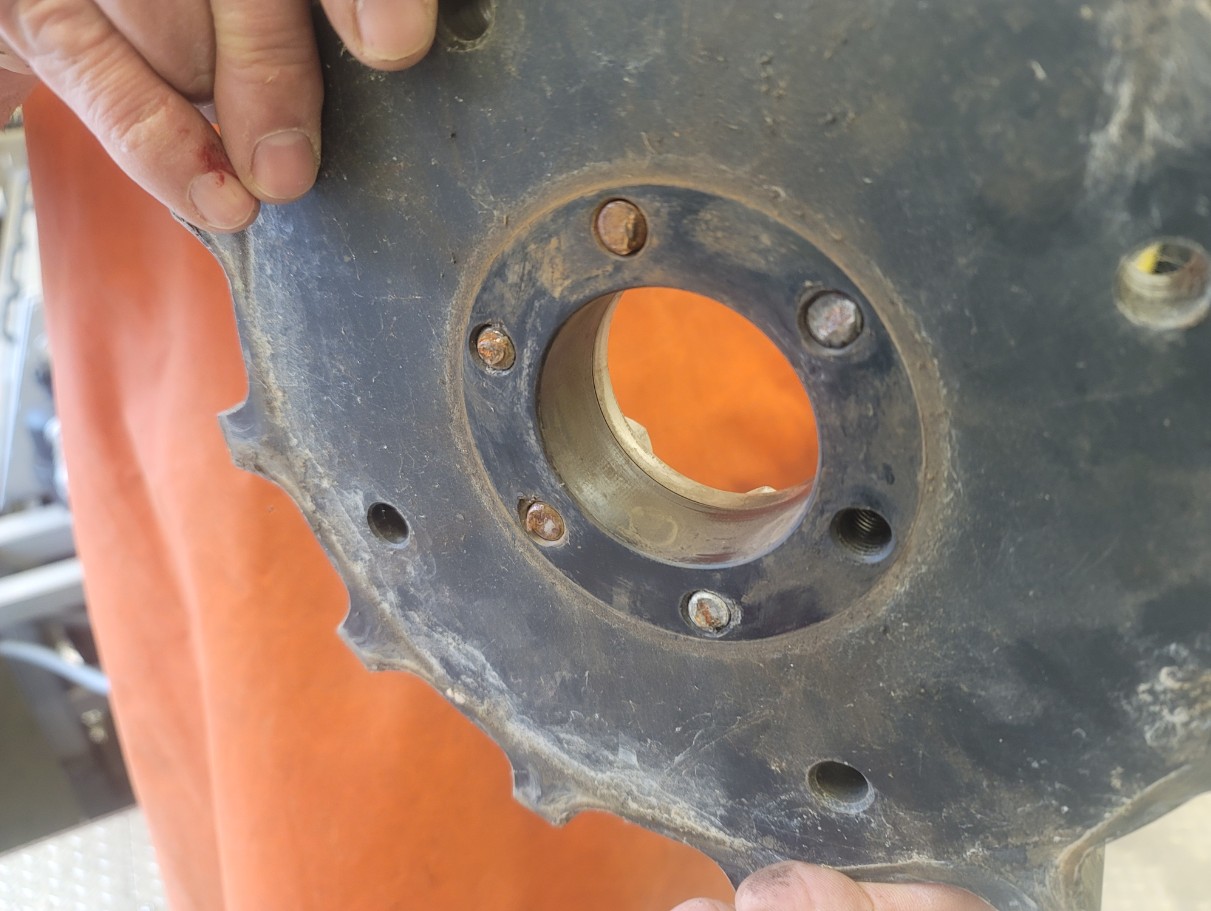
A reliable chain drive is the product of a series of small, deliberate choices: the correct ISO 606 series, a pitch selected from a rating chart with an honest service factor, the right number of strands, a small sprocket with enough teeth, a lubrication regime that matches the chain speed and a measured replacement limit rather than a visual guess. Each of these decisions is easy to make at the design stage or during a rebuild and expensive to correct after a series of breakdowns. Recording the elongation measured at each inspection also turns chain replacement into a planned job rather than an emergency. Premium chains from SEDIS and matching sprockets from CHIARAVALLI are a good starting point for critical drives, and our analysis of chain or belt on a conveyor drive helps decide whether a chain is the right transmission in the first place.
Sizing a new chain drive or deciding whether a worn chain is still fit for service? Our team helps select pitch and strand count, matches sprockets from stock and advises on lubrication and replacement intervals. Book a free consultation.
Image credits: “Chain And Sprocket – Mechanisms – Kolkata 2010-07-02 6449” by Biswarup Ganguly (CC BY 3.0); “Dale Hollow NFH chain drive gear sprocket with sheared bolts” by USFWS (Public domain), via Wikimedia Commons.