
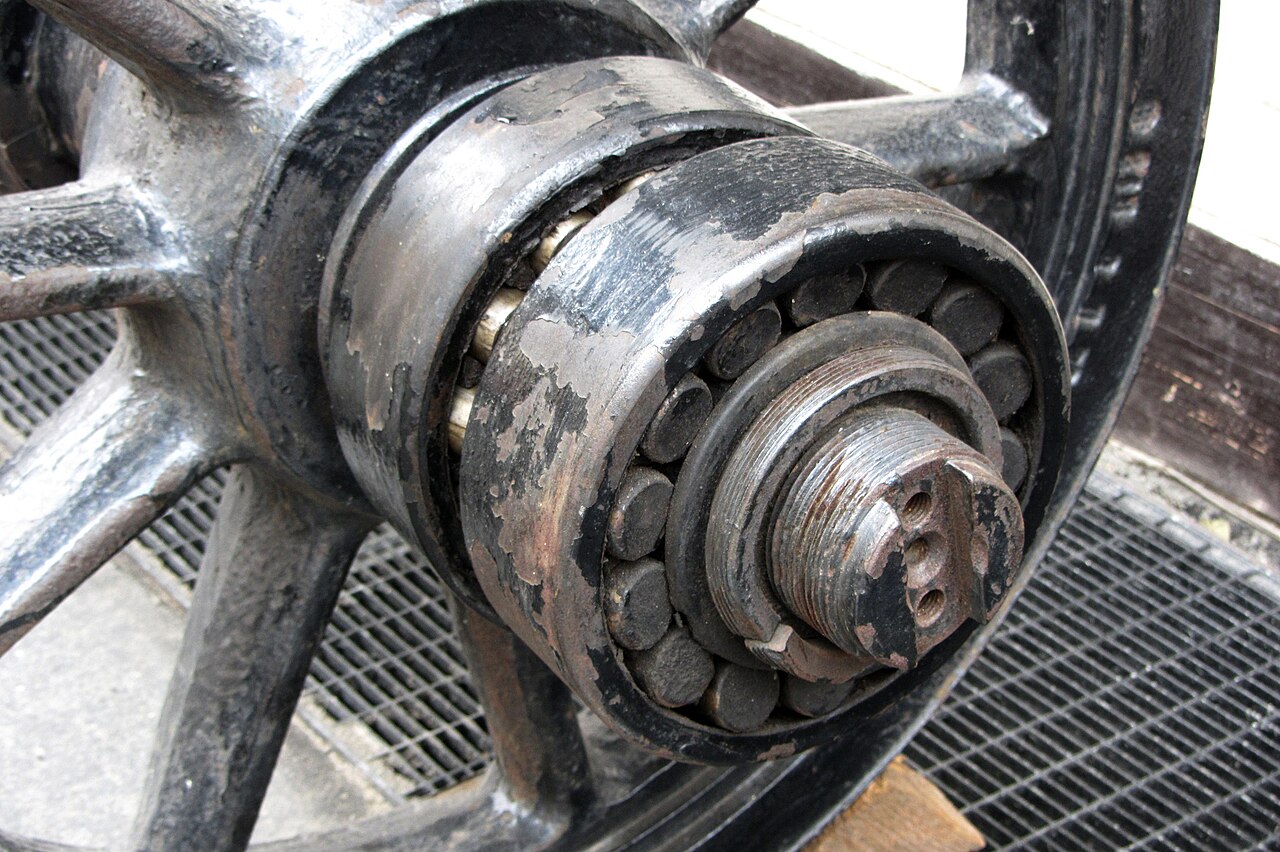
A maintenance fitter on a paper-converting line pumps eight strokes of grease into the nipple on top of a plummer block every Monday, exactly as the checklist says, and still finds the same spherical roller bearing running hot and noisy three months later. When the housing is finally opened, one row of rollers is coated in fresh grease while the other is dry, discoloured and starting to flake. The W33 lubrication groove in the outer ring was supposed to prevent exactly this, but the replacement bearing fitted last year came from a different box, the nipple was moved during a housing swap, and nobody checked whether the grease was actually reaching the centre of the bearing. This article explains what the W33 feature is, how the groove and holes route lubricant between the two roller rows, how much grease to use, and which small mistakes quietly defeat the whole system on real machines.
What the W33 suffix actually describes
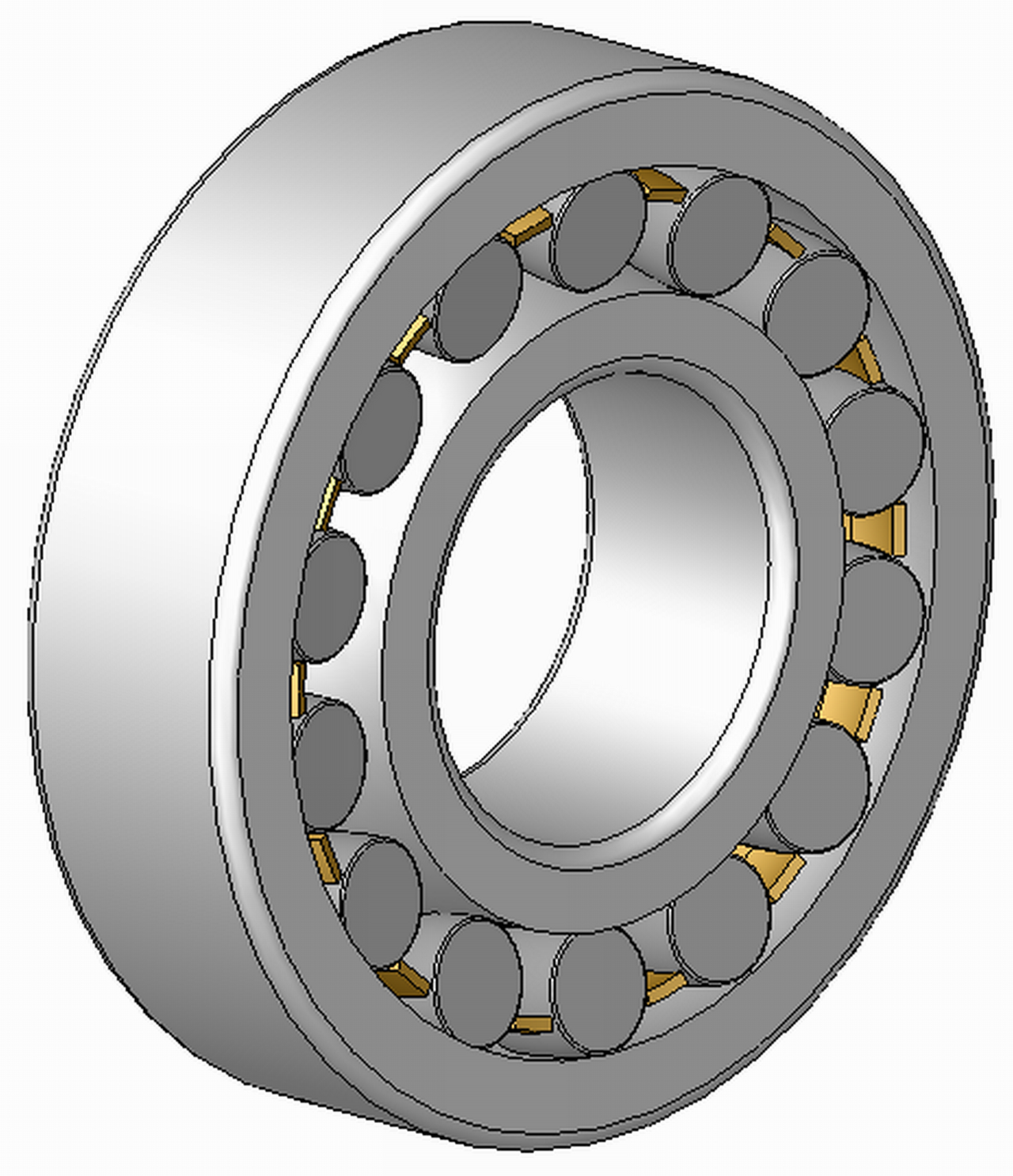
On SKF spherical roller bearings the suffix W33 identifies an annular groove machined around the outside of the outer ring together with three radial holes drilled through to the raceway, spaced at 120 degrees. The groove sits on the centreline of the bearing, directly between the two rows of barrel-shaped rollers, so grease injected into it travels round the ring, drops through the holes and arrives in the space between the rows, where the guide ring or flangeless centre section sits. From there it is drawn outwards by the rotation of the rollers into both raceways at the same time. Most current SKF E-design spherical roller bearings carry the groove and holes as standard, which is why the suffix often no longer appears on the box, while related suffixes such as W77 (the same holes delivered plugged) and W513 (extra holes in the inner ring) cover special cases. Other manufacturers use their own codes, so a direct cross-reference always needs a catalogue check rather than an assumption.
Why feeding grease from the centre matters
A spherical roller bearing is really two bearings sharing an outer raceway, and each row needs its own supply of clean lubricant. When grease is pushed in from the side, through a housing port aimed at the bearing face, it has to pass through the first row before it can reach the second, and much of it is churned, heated and expelled on the way. The second row receives what is left, which is often old, partially oxidised grease mixed with wear debris from the first row. Feeding through the W33 groove reverses that logic: fresh grease enters exactly between the rows, divides roughly equally and pushes the spent lubricant outwards towards the seals, where it can escape. The practical result is lower operating temperature, more uniform roller wear and, according to manufacturer guidance, a significantly smaller relubrication quantity for the same protection. On large housed bearings in fans, conveyors and pulpers this is the difference between a predictable grease routine and a rolling lottery.
How much grease to pump through the groove
SKF publishes two simple formulas for the relubrication quantity that make the point in numbers. When grease is supplied from the side, the recommended amount is roughly Gp = 0.005 × D × B grams, with D the outside diameter and B the width in millimetres. When it is supplied through the W33 groove and holes, the figure drops to Gp = 0.002 × D × B. For a FAG 22216-K-M-C3 or an equivalent 22216 bearing, with D = 140 mm and B = 33 mm, side feeding means about 23 grams per interval, while centre feeding needs only around 9 grams. Weigh a few strokes of your grease gun once, because a typical manual gun delivers between one and two grams per stroke, and the eight strokes from the Monday checklist could be anything from half to double the right figure. The interval itself still depends on speed, temperature and load, which is covered in our guide to relubrication intervals calculated for the real duty cycle.
Lining up the housing nipple with the bearing groove
The groove only works if the grease arrives on top of it. Split plummer blocks designed for spherical roller bearings normally place the lubrication nipple on the housing centreline, directly above the bearing groove when the bearing is correctly positioned, and the locating rings fix the axial position on the side that carries the axial load. If the bearing is shifted towards one side, for example because the locating rings were fitted to the wrong housing or the adapter sleeve was driven too far, the nipple can end up delivering grease onto the shoulder of the outer ring rather than into the groove, and the lubricant then follows the path of least resistance down one face. The same happens when a non-standard housing with a side lubrication port is paired with a W33 bearing. Our article on split plummer block housings for spherical roller bearings explains the locating and non-locating arrangement that keeps the bearing centred under the nipple.
Mistakes that starve the centre of the bearing
Most W33 problems seen in workshops are not caused by the bearing but by small decisions made during a replacement. A bearing with plugged holes may be fitted from old stock and greased for years without a gram ever reaching the rollers. A grease line can be connected to an auxiliary tapped hole in the housing cap that was intended for a temperature probe. Some fitters pack the bearing completely full at installation, which creates churning, a temperature peak and early grease ageing, when the usual advice for medium speeds is to fill the bearing and roughly a third to half of the free housing volume. Mixing an incompatible thickener with the original grease can turn the groove into a channel of hardened soap that blocks the holes. And on vertical shafts the groove alone does not guarantee distribution, because gravity pulls grease towards the lower row, so the housing design and drain position need extra attention during commissioning.
Grease choice and purge paths in centre-fed bearings
Centre feeding pushes old grease outwards, so the housing must give it somewhere to go. Plummer blocks with labyrinth or taconite seals release purged grease through the seal gap, while housings with double-lip contact seals often need a drain plug or a pressure-relief valve, otherwise fresh grease raises the internal pressure, overheats the bearing and can lift a seal lip. The grease itself should match the duty: a lithium-complex or calcium-sulphonate grease with an NLGI 2 consistency and an EP additive package covers most medium-speed, moderately loaded applications, while very large, slow bearings with heavy loads benefit from a higher base oil viscosity. Consistency matters for distribution too, because a grease that is too stiff for the ambient temperature will not flow around the groove and through the holes in cold weather. For a broader decision on lubricants, see our comparison of grease and oil on a mid-speed shaft before standardising one product across the plant.
Checking W33 when you order a replacement
When a spherical roller bearing is replaced, the designation on the old ring is the starting point, but it is not the whole story. Check whether the existing installation is fed through a central nipple or from the side, and confirm that the replacement has the groove and holes either as standard or through the explicit suffix. A bearing such as the SKF 22220 E/C3 carries the feature in its basic E design, while bearings from other brands may use a different suffix or a different hole count, which is perfectly acceptable as long as the groove is there and centred. Internal clearance is the other detail that often changes unnoticed during substitution, and our guide to C3, C4 and CN internal clearance explains when a jump in clearance class is justified. If the bearing sits on a tapered sleeve, order the matching adapter sleeve with lock nut at the same time so that mounting drive-up and axial position are under control.
The W33 groove is a small piece of machining that solves a large problem: getting fresh lubricant to both rows of a spherical roller bearing without overfilling it. It only works when the bearing actually has the feature, the housing nipple sits above it, the right quantity of a compatible grease is used and the old grease has a way out. A quick audit of the critical housed bearings on a line, comparing nipple positions, bearing designations and grease gun output, usually reveals at least one installation where the centre of the bearing has been dry for months. Fixing it costs a few grams of grease and an hour of checking, which is far cheaper than the next unplanned stop. Brands such as SKF and FAG publish relubrication data for their spherical roller ranges, and those figures are always the best reference for a specific bearing size and speed.
Not sure whether your replacement spherical roller bearing has the W33 feature? Our team checks designations, housing nipple positions and grease quantities against your existing installation before you order. Book a free consultation.
Image credits: “C00 328 Doppelpendelrollenlager” by Falk2 (CC BY-SA 4.0); “Spherical-roller-bearing double-row din635-t2” by Silberwolf (CC BY 2.5), via Wikimedia Commons.